Updated October 2026 by Wolf River Electric
Ready for the next step? Learn about home battery backup from Wolf River Electric, or get a free quote.
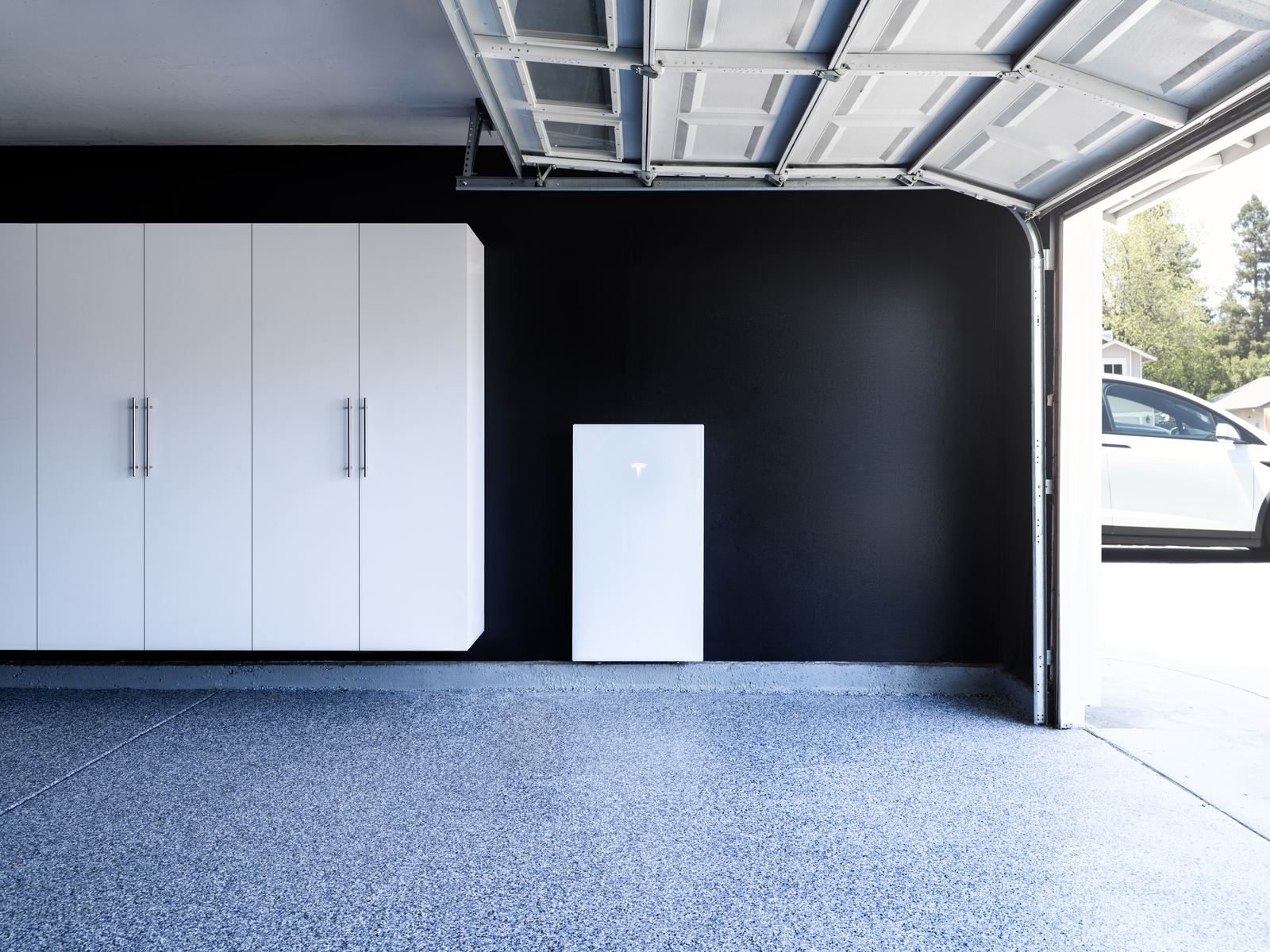
A Tesla Powerwall 3 is warrantied for 10 years, and Tesla guarantees it will still hold at least 70% of its 13.5 kWh capacity at year 10. For normal home use (storing solar power and backup), the warranty has no cycle limit. Most homeowners should plan on 10 years of full warranty coverage and a battery that keeps working after that with gradually less capacity.
Below we cover what the warranty really promises, how long a Powerwall 3 runs a house when the power goes out, how it handles Minnesota and Wisconsin winters, and how it compares with the FranklinWH and Enphase batteries Wolf River Electric also installs.
How long does a Tesla Powerwall 3 last?
Tesla’s U.S. Powerwall warranty covers defects for 10 years from installation and guarantees 70% of the 13.5 kWh rated capacity at 10 years. That means a battery that started with 13.5 kWh should still store at least about 9.5 kWh in year 10.
| Warranty item | Powerwall 3 |
|---|---|
| Warranty length | 10 years from installation |
| Capacity guaranteed at 10 years | 70% of 13.5 kWh (about 9.5 kWh) |
| Cycles for solar self-use and backup | Unlimited |
| Other uses (for example some utility programs) | Limited to 37.8 MWh of total throughput |
After year 10 the battery does not stop working. It holds less energy each year. When it no longer covers what you need in an outage, you can add a Powerwall 3 expansion unit or replace the battery.
How long will a Powerwall 3 run a house during a power outage?
It depends on what you keep running. One Powerwall 3 stores 13.5 kWh and can put out up to 11.5 kW at once, enough to start most central air conditioners and well pumps. Divide 13.5 kWh by the power your home draws to get the hours:
| What is running | Average draw | About how long one Powerwall 3 lasts |
|---|---|---|
| Essentials: refrigerator, furnace fan, lights, internet, phone charging | About 0.5 kW | About 24 hours or more |
| Essentials plus a well pump, microwave and TV | About 1 kW | About 13 hours |
| Most of the house, no electric heat | About 2 kW | About 6 to 7 hours |
| Whole house with central air running | About 3 kW or more | About 4 hours |
With solar panels, the battery recharges during the day, so a sunny outage can run much longer. Electric heat, electric water heaters and EV charging drain a battery fast, so most backup plans leave those off or add a second unit. Up to 4 Powerwall 3 units can be connected for more storage.
Does a Powerwall 3 work in Minnesota winters?
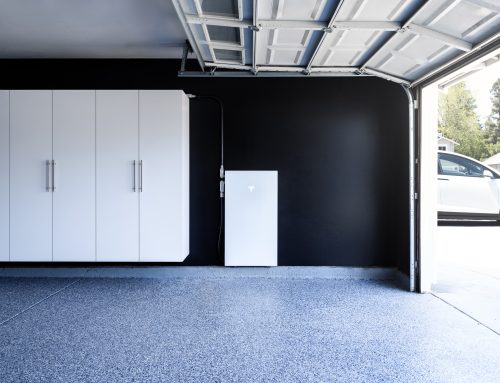
Yes, with a few things to know. Tesla rates the Powerwall 3 to operate from -4°F to 122°F. It manages its own battery temperature, and we mount it where it stays inside that range, often in an attached garage, following code clearances.
The bigger winter factor is solar recharging. Across 1,456 Wolf River Electric systems in Minnesota monitored through Enphase, December averaged about 5.4 kWh per panel for the month because of snow cover and short days. A 30-panel system makes about 160 kWh in a typical December, roughly 5 kWh a day, so the battery recharges slowly in a long winter outage.
For multi-day winter outages, many homeowners pair a battery with a Generac standby generator. The generator covers long stretches and the battery covers short outages quietly. See our Minnesota winter backup power guide and battery vs generator comparison.
Powerwall 3 vs FranklinWH vs Enphase: which battery lasts longest?
Wolf River Electric installs all three. The Powerwall 3 has the most power per unit. FranklinWH and Enphase carry longer 15-year warranties.
| Tesla Powerwall 3 | FranklinWH aPower 2 | Enphase IQ Battery 10C | |
|---|---|---|---|
| Storage per unit | 13.5 kWh | 15 kWh | 10 kWh |
| Continuous power | 11.5 kW | 10 kW | 7.08 kVA |
| Warranty | 10 years | 15 years | Up to 15 years or 6,000 cycles |
| Warranty capacity or throughput | 70% at 10 years | 60 MWh of throughput | 60% at end of warranty |
| Rated temperature range | -4°F to 122°F | -4°F to 131°F | -4°F to 122°F charging, to 131°F discharging |
| Installed price with Wolf River Electric (as of October 2026) | About $12,500 to $20,900 | About $15,400 to $22,000 (includes aGate) | About $11,800 to $19,700 (includes transfer switch) |
Prices: the low end is with a prepaid lease plus our 10% discount, the high end is buying outright. A panel or service upgrade, if your home needs one, is priced separately. Specs are from each maker’s U.S. datasheet and warranty. Compare the options on our home battery backup page, or see the Tesla Powerwall, FranklinWH and Enphase pages.
What does a Powerwall 3 do every day?
Most days it stores extra solar power from the afternoon and runs the house with it in the evening, so you buy less power from the utility. When the grid goes down, it switches to backup automatically. With time-based control, it can also charge when power is cheap and discharge when rates are high, where your utility has time-of-use rates.
Tesla Powerwall questions
How often do you have to replace a Powerwall?
Not on a set schedule. The warranty runs 10 years with 70% capacity guaranteed. Replace or add a unit when the stored energy no longer covers what you need in an outage.
Can I add a battery to an existing generator?
Often, yes. Connecting an existing standby generator to a battery system runs about $2,000 with Wolf River Electric, depending on the generator’s age and compatibility.
Is there a tax credit for a home battery in 2026?
The federal homeowner credit ended December 31, 2025. Leases and prepaid leases still qualify for a limited time, which is how many of our customers get the lower end of the price range.
Planning backup power? See our home battery backup options, compare standby generators, or get a free quote.
On Xcel Energy’s Time of Use rate in Minnesota, a home battery can also run the house through the 6 pm to 9 pm weekday peak. See Xcel Energy Time of Use hours and rates.
Free quote
See what solar and backup power can save you
Get a custom design and savings estimate from Wolf River Electric. No cost, no obligation.