Updated October 2026.
Ready for the next step? Learn about solar panel repair and maintenance from Wolf River Electric, or get a free quote.
Short answer: most solar panels last 25 to 30 years or more. They don’t stop working at a set age. They slowly make a little less power each year, usually about 0.5% a year for quality panels.
- Panels: 25 to 30+ years of useful life
- Typical output loss: about 0.5% a year, often less on newer panels
- Premium panel warranties: about 90 to 92% of rated output guaranteed at year 25
- Inverters: about 10 to 15 years for string inverters, 25-year warranties on Enphase microinverters
- Home batteries: 10-year warranties are standard
If you’re thinking about solar, how long the system lasts matters as much as what it costs. A system that keeps producing for 30 years pays you back many times over. Below is what the research says about panel lifespan, what wears out first, how Minnesota, Wisconsin and Iowa weather plays into it, and what you can do to get the most years out of your system.
What “lifespan” means for a solar panel
Solar panels have no moving parts, so they rarely fail all at once. Instead, output drops a little each year. This slow drop is called degradation. A panel rated at 400 watts might produce about 350 watts after 25 years, and it will keep producing after that.
So the useful life of a panel is really the point where its output no longer covers your needs, not the day it stops working. Large solar farms in the US are now planned to run about 32.5 years on average, up from about 21.5 years in 2007, according to a Lawrence Berkeley National Laboratory survey. The US Department of Energy puts panel life at 25 to 35 years.
How fast do solar panels lose output?
This is the best-studied part of the question. The National Renewable Energy Laboratory (now the National Laboratory of the Rockies) has tracked panel degradation for decades:
- A review of about 2,000 measured rates found a median loss of 0.5% per year.
- A larger follow-up with more than 11,000 rates found a median of 0.5 to 0.6% per year for standard silicon panels. Most panels decline at a steady, predictable rate.
- A 2024 study of about 2,500 commercial and utility sites found whole systems lose about 0.75% per year. That number includes inverters and dirt, not just panels. Systems in cool climates lost 0.48% a year, compared with 0.88% in hot climates.
- At NREL’s outdoor test site in Colorado, some newer high-efficiency panels lost only 0.1 to 0.2% per year.
Here is what that looks like over time for a panel that loses 0.5% a year:
| Years in service | Output remaining (0.5% a year) | Output remaining (premium warranty curve) |
|---|---|---|
| 10 | 95% | about 95.8% |
| 20 | 90% | about 93.3% |
| 25 | 87.5% | 92% |
| 30 | 85% | about 90.8% |
The premium curve uses REC’s published guarantee: 98% in year 1, then no more than 0.25% a year. Your real output also depends on shading, weather and how the system was installed.
What solar panel warranties guarantee
Panel warranties come in two parts. The product warranty covers defects in the panel itself. The performance (power) warranty guarantees a minimum output over time. Here are current terms from brands we install:
- Qcells Q.TRON: 25-year product and performance warranty. At least 98.5% of rated power in year 1, no more than 0.33% loss a year after that, and at least 90.58% at year 25.
- REC Alpha Pure-RX: 98% in year 1, then no more than 0.25% a year, for 92% at year 25. The product warranty is 20 years standard, or 25 years through REC’s ProTrust program when a REC-certified installer registers the system. Wolf River Electric is REC ProTrust certified.
- Silfab: 30-year linear performance warranty on its residential panels.
A warranty is only as good as the company behind it, so it pays to choose panel brands that are financially stable and have a track record in the US.
Inverters, batteries and other parts
Panels usually outlast the electronics connected to them. Plan for this when you compare quotes.
- String inverters: the Department of Energy notes that power electronics often last about 10 years, well short of panel life. SolarEdge, for example, includes a 12-year standard inverter warranty that can be extended. On a string system, budget for one inverter replacement over the life of the panels.
- Microinverters: Enphase IQ8 microinverters carry a 25-year warranty, which lines up with panel life. Each panel has its own microinverter, so one failure doesn’t take down the whole array.
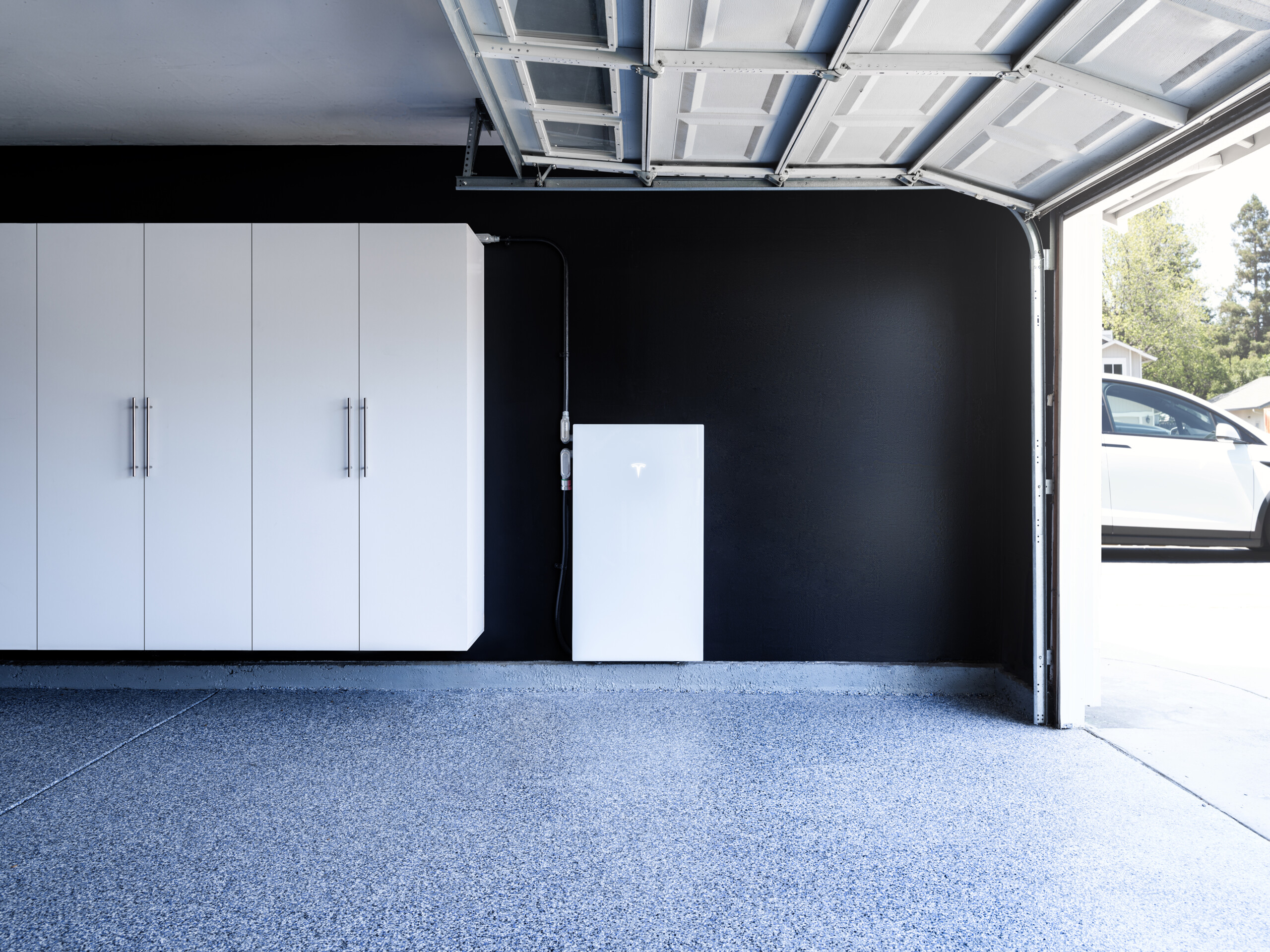
- Home batteries: the Tesla Powerwall 3 has a 10-year warranty that guarantees at least 70% of its 13.5 kWh capacity at year 10, with unlimited cycles for solar charging and backup. Enphase IQ Batteries carry warranties of up to 15 years. Read our guide on how long a Tesla Powerwall lasts, or see our battery backup options.
- Racking and wiring: aluminum racking and rated outdoor wiring are built to last as long as the panels when they’re installed correctly.
Does Midwest weather shorten panel life?
Mostly no. Cold weather actually helps.
Cold makes panels more efficient
Panels lose a little output as they heat up, about 0.24 to 0.34% for every degree Celsius above 25°C (77°F), depending on the model. On a cold, sunny day in January, panels can produce more than their rating. NREL’s fleet data also shows systems in cool climates degrade slower than those in hot ones.
Snow
Panels are built to carry heavy snow. Qcells, for example, rates its Q.TRON panels for 5,400 pascals of snow load in use, after testing them at 8,100 pascals. Snow usually slides off tilted panels within a day or two of sun. Ground mounts, which we install often on Midwest farms and acreages, can be set at a steeper angle so snow clears faster.
Hail
Hail is the weather risk that matters most. Panels certified to the IEC 61215 standard must survive 25 mm (1 inch) ice balls at 23 meters per second. Many panels go well beyond that: REC tested the Alpha Pure-RX with 55 mm (about 2.2 inch) hail. Independent lab Kiwa PVEL uses 50 mm hail in its tougher tests. NREL found that large hail, over 1 inch, is one of the events that causes bigger yearly losses. Make sure your homeowners policy lists the solar system so storm damage is covered.
What actually shortens a solar panel’s life
- Poor installation. Loose connectors, wires rubbing on the roof, bad flashing and walking on panels cause more problems than weather does.
- Low-quality panels. In Kiwa PVEL’s 2025 reliability testing, 83% of manufacturers had at least one panel fail a test. Brand and model matter.
- Cracked cells and thin glass. Newer multi-wire cell designs have largely solved cell cracking, but the International Energy Agency’s 2025 review documents breakage in some panels made with very thin (2 mm or less) glass.
- Heat and shade. Panels mounted tight to a roof with no airflow run hotter. Hard shade on part of a panel can create hot spots over time.
How to make your solar panels last longer
- Watch your monitoring app. A sudden drop in production is the earliest sign of a problem. The Department of Energy notes that good maintenance can raise how much of the expected output a system delivers from about 92% to over 95%.
- Start with a healthy roof. If your roof has less than 10 to 15 years left, replace it before going solar. If you need a new roof later, we offer solar removal and reinstall.
- Leave snow alone. Don’t climb up or scrape panels with metal tools. Let the sun do the work.
- Keep trees trimmed so new shade doesn’t creep in over the years.
- Get a checkup after big storms, especially after hail.
When should you replace or upgrade old panels?
Consider it when production has dropped well below what your warranty guarantees, when panels are physically damaged, or when you need more power for an EV or heat pump and adding new panels makes more sense than patching an old system.
When panels do reach the end of their life, recycling options are growing. There is still no federal recycling rule for solar panels; the EPA says it is planning to propose one. Minnesota’s Pollution Control Agency delivered recommendations on panel recycling to the legislature in January 2025.
How Wolf River Electric backs a long-lasting system
Equipment warranties cover the panels, inverters and batteries themselves. On top of that, Wolf River Electric gives residential customers a 25-year workmanship warranty that covers our installation work, including roof leaks from the install. We’re a certified installer for REC (ProTrust), Enphase, Tesla, FranklinWH and SPAN, and our own local crews install and service systems across the Midwest. Wolf River Electric has been in business since 2014.
Already have solar from another company? We service systems we didn’t install, too. See solar repair and maintenance, or get a free quote for a new system.
Frequently asked questions
Do solar panels stop working after 25 years?
No. Twenty-five years is a common warranty length, not an end date. A quality panel will usually still produce about 85 to 92% of its original output at year 25 and keep working after that.
How long do solar panels last in Minnesota, Wisconsin and Iowa?
About the same or longer than in warmer states. Cold temperatures raise efficiency, and NREL data shows systems in cool climates degrade more slowly. Hail is the main weather risk, so choose panels with strong hail ratings and keep the system on your homeowners policy.
How long do solar inverters last?
String inverters often last 10 to 15 years, so plan for one replacement. Enphase microinverters carry 25-year warranties.
How long does a home solar battery last?
Most home batteries carry 10-year warranties. The Tesla Powerwall 3 guarantees at least 70% of its capacity at 10 years.
Do newer panels last longer than older ones?
Generally, yes. Field data shows some newer high-efficiency panels losing only 0.1 to 0.2% a year, compared with about 0.5% for typical older panels, and warranties have grown from 20 to 25 or 30 years.
Do solar panels need cleaning to last?
Usually not. Rain and snow clear most dust, though spring pollen, bird droppings or dust from a gravel road can build up. Cleaning helps output more than lifespan, and a gentle rinse from the ground is usually enough.
Sources
- Lawrence Berkeley National Laboratory: increase in expected useful life of solar plants
- US Department of Energy: end-of-life management for solar panels
- NREL: Photovoltaic degradation rates, an analytical review
- NREL: how extreme weather and aging affect the US solar fleet (2024)
- NREL: long-term field performance of modern panels
- Qcells Q.TRON datasheet and warranty
- REC Alpha Pure-RX datasheet (US)
- Enphase warranties
- Tesla Powerwall warranty (US)
- IEA PVPS: degradation and failure modes of new cell and module technologies (2025)
- EPA: end-of-life solar panels
- Minnesota Pollution Control Agency: solar panel recycling
Free quote
See what solar and backup power can save you
Get a custom design and savings estimate from Wolf River Electric. No cost, no obligation.