
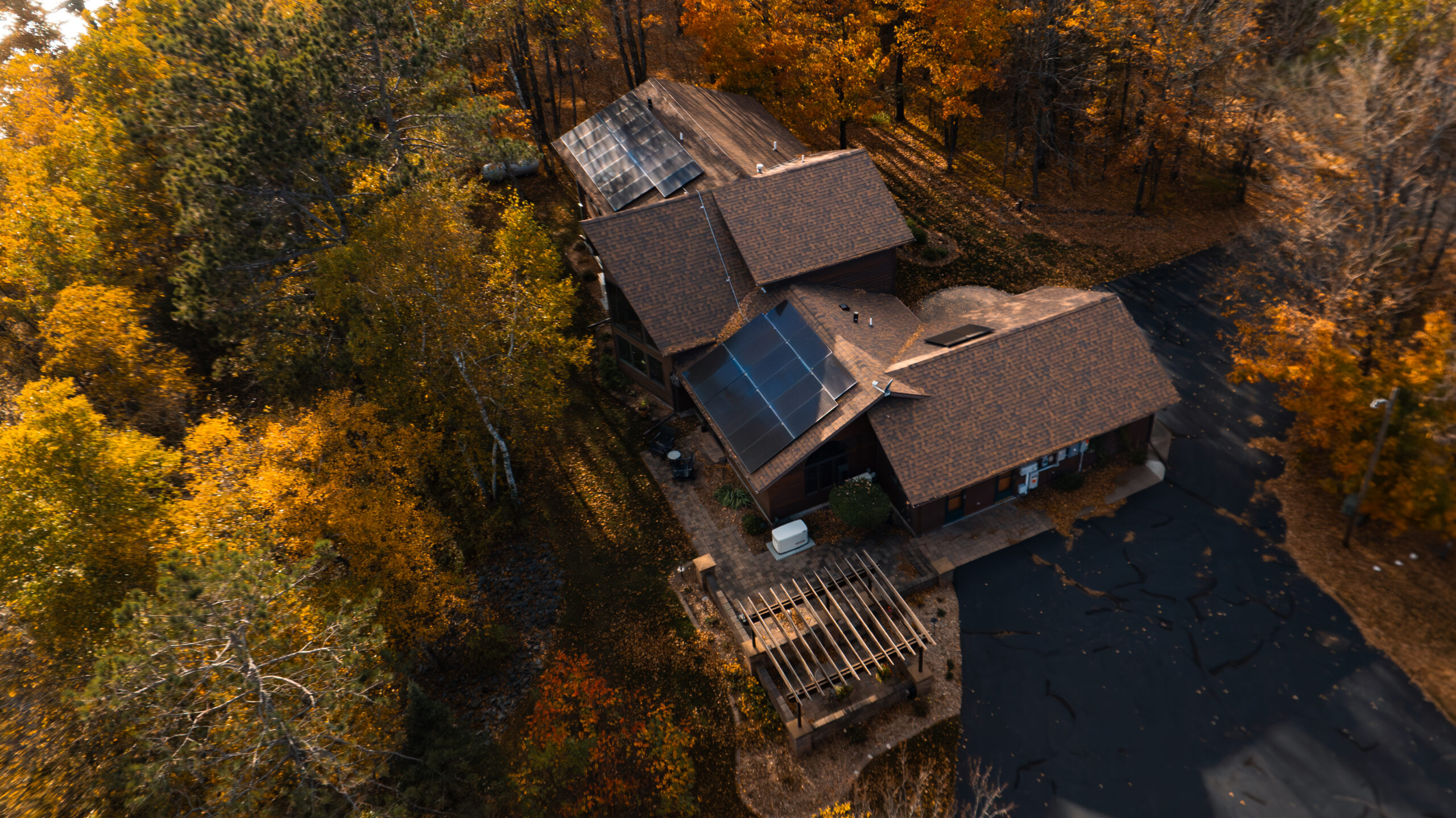
Fall solar installation is a smart opportunity for Midwest homeowners who want to plan ahead instead of making energy decisions in the middle of winter. September offers time to review your electricity use, evaluate your roof and electrical system, and build a solar plan that supports the home you have now—and the upgrades you may want later.
Whether you are thinking about rooftop solar alone or a complete residential solar and energy system, beginning the conversation in fall can make the process feel more organized, informed, and tailored to your goals.
1. Plan for Your Full-Year Energy Use, Not Just One Utility Bill
A solar system should be designed around more than one month of electricity use. Your household’s annual usage, seasonal patterns, and future plans all matter.
Before a consultation, gather recent utility bills and consider what may change over the next few years. Are you adding an EV? Replacing gas appliances with electric options? Building an addition? Working from home more often? Those choices can affect the system size and electrical setup that make sense for your property.
The U.S. Department of Energy recommends reviewing current and future electricity needs—including planned changes such as EV charging—when evaluating solar. Its step-by-step guide to going solar is a helpful starting point.
You can also use Wolf River Electric’s free solar calculator to begin exploring a system based on your home and energy goals.
2. Include Your Roof in the Solar Conversation
Your roof is a major part of any solar decision. Its age, condition, shape, orientation, and nearby shade all help determine the right approach.
If your roof is nearing replacement, it is often worth discussing solar and roofing together instead of installing panels now and removing them later for a roof project. The Department of Energy also advises homeowners to consider roof age and solar suitability early in the process.
Wolf River Electric’s re-roofing with solar panels service helps homeowners coordinate those decisions into one cohesive plan. Even if your roof is in great shape, a professional site assessment can help determine the best layout for long-term performance.
3. Think Beyond Panels: Battery Storage and Smart Electrical Controls
Solar panels are the foundation, but they are not the only way to improve your home’s energy independence.
If backup power matters to your household, bring it up at the beginning of the planning process. Wolf River Electric can help you explore solar battery storage for critical-load backup, evening energy use, and greater peace of mind during outages.
It is also a good time to consider whether your electrical panel supports the future you have in mind. A smart-home energy system can provide better visibility into your home’s electricity use and help prioritize circuits when solar and storage are part of the equation.
The right configuration depends on your home, panel capacity, usage, and priorities—so planning the pieces together is often easier than trying to solve one need at a time.
4. Make EV Charging Part of the Same Plan
An EV can add a meaningful new electrical load to your home. If an EV is in your future, include it in your solar conversation now—even if you do not plan to purchase one immediately.
The Alternative Fuels Data Center notes that many homeowners choose 240-volt Level 2 charging equipment for faster home charging. Learn more through its home EV charging guide.
Wolf River Electric’s EV charging services can help evaluate your home’s capacity and create a clean, code-compliant charging solution that works with a future solar and battery setup.
5. Give Yourself Time for a Thoughtful Project Plan
A solar project involves more than installing panels. It can include a site assessment, system design, equipment selection, permitting, utility coordination, electrical work, and final interconnection.
Starting in fall gives you time to make decisions thoughtfully rather than waiting until the first major winter storm reminds you how dependent your home is on the grid. It also lets you account for a roof replacement, battery-storage goals, EV charging, or smart-panel upgrades as part of one energy strategy.
Wolf River Electric’s solar installation services cover residential solar, battery storage, EV charging, smart electrical upgrades, roofing coordination, and ongoing service.
Can Solar Panels Be Installed in Fall?
In many cases, yes. Actual installation timing depends on your home, roof condition, weather, permitting, utility requirements, and project scope. A fall consultation does not obligate you to a rushed installation—it simply gives you more time to understand your options and create the right plan.
Do Solar Panels Work During Midwest Winters?
Yes. The U.S. Department of Energy notes that solar panels are built to work in all climates. Production changes with daylight hours, weather, and snow cover, which is why Wolf River Electric designs systems around year-round energy needs rather than a single season.
Start Your Fall Solar Project With Confidence
A fall solar installation plan can help you prepare for rising energy needs, future home upgrades, and the seasons ahead. Whether your goal is lower electric bills, battery backup, EV charging, or a smarter electrical system, Wolf River Electric can help you build a solution around your property and priorities.
Request your free solar quote and start planning today.