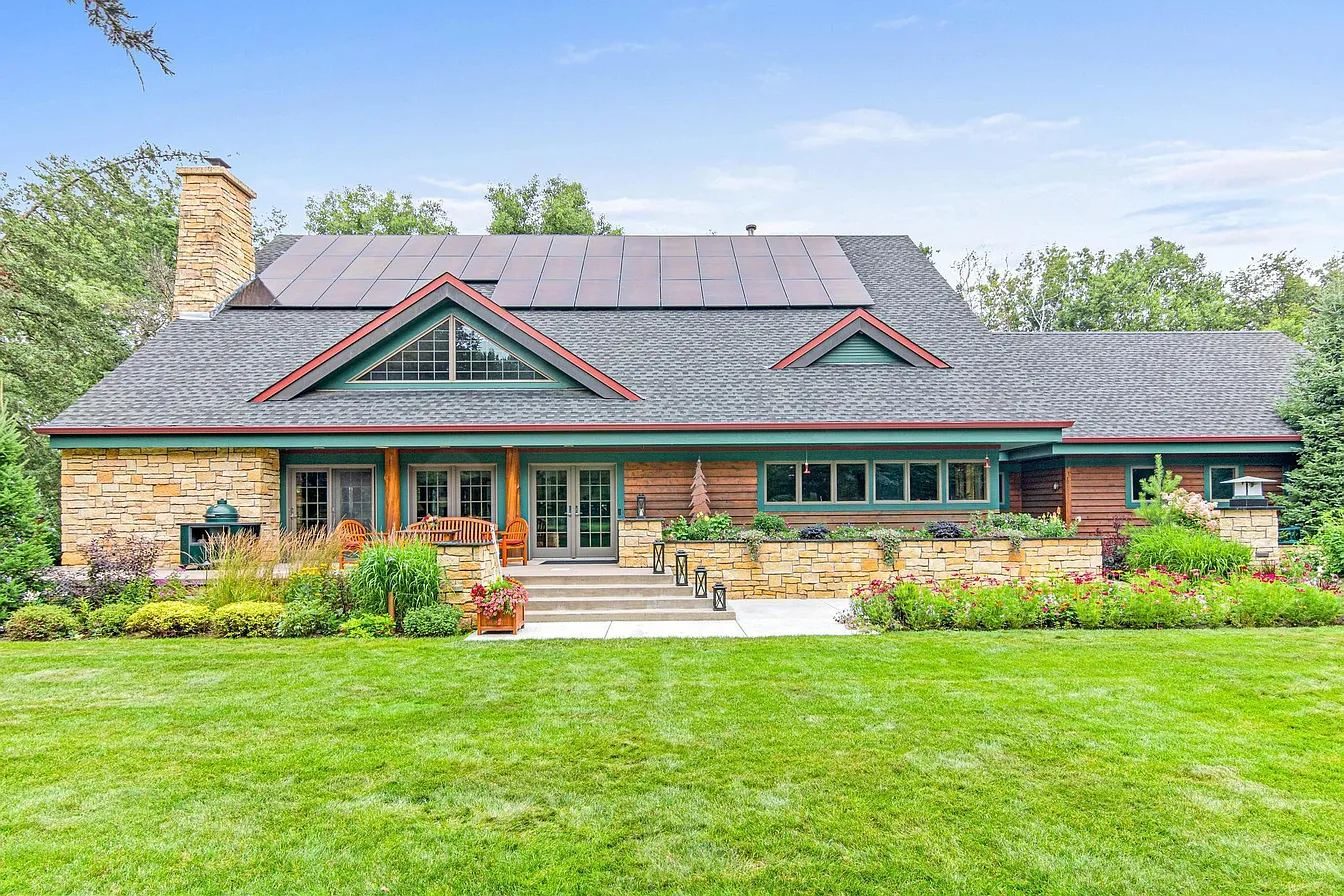
Updated October 2026 by Wolf River Electric, a solar installer serving homes across the Upper Midwest.
How many solar panels do I need? The simple formula
You need three numbers: how much electricity you use in a year, how much one kilowatt (kW) of panels makes where you live, and the wattage of the panels.
- Find your yearly use. Add up the kWh on your last 12 electric bills, or find the 12-month total in your utility account. The average U.S. home uses roughly 10,000 to 11,000 kWh a year (U.S. Energy Information Administration).
- Divide by 1,200. In Minnesota, Wisconsin and Iowa, each kW of panels on a roof facing south to west, with little shade, makes about 1,150 to 1,300 kWh a year (NREL PVWatts). We use 1,200 as a round number. The result is your system size in kW.
- Divide by the panel size. Multiply the system size by 1,000 to get watts, then divide by the panel wattage and round up.
Example: 9,000 kWh a year divided by 1,200 is 7.5 kW. 7,500 watts divided by 400-watt panels is 18.75, so 19 panels.
Solar panel chart by monthly electric use
Based on 1,200 kWh per kW per year. Your roof’s direction and shade can move these numbers up or down.
| Monthly use | System size | 400 W panels | 460 W panels | 610 W panels |
|---|---|---|---|---|
| 500 kWh (6,000 a year) | 5 kW | 13 | 11 | 9 |
| 750 kWh (9,000 a year) | 7.5 kW | 19 | 17 | 13 |
| 1,000 kWh (12,000 a year) | 10 kW | 25 | 22 | 17 |
| 1,250 kWh (15,000 a year) | 12.5 kW | 32 | 28 | 21 |
See what a system that size costs in Minnesota, Wisconsin or Iowa.
Which solar panels change the count
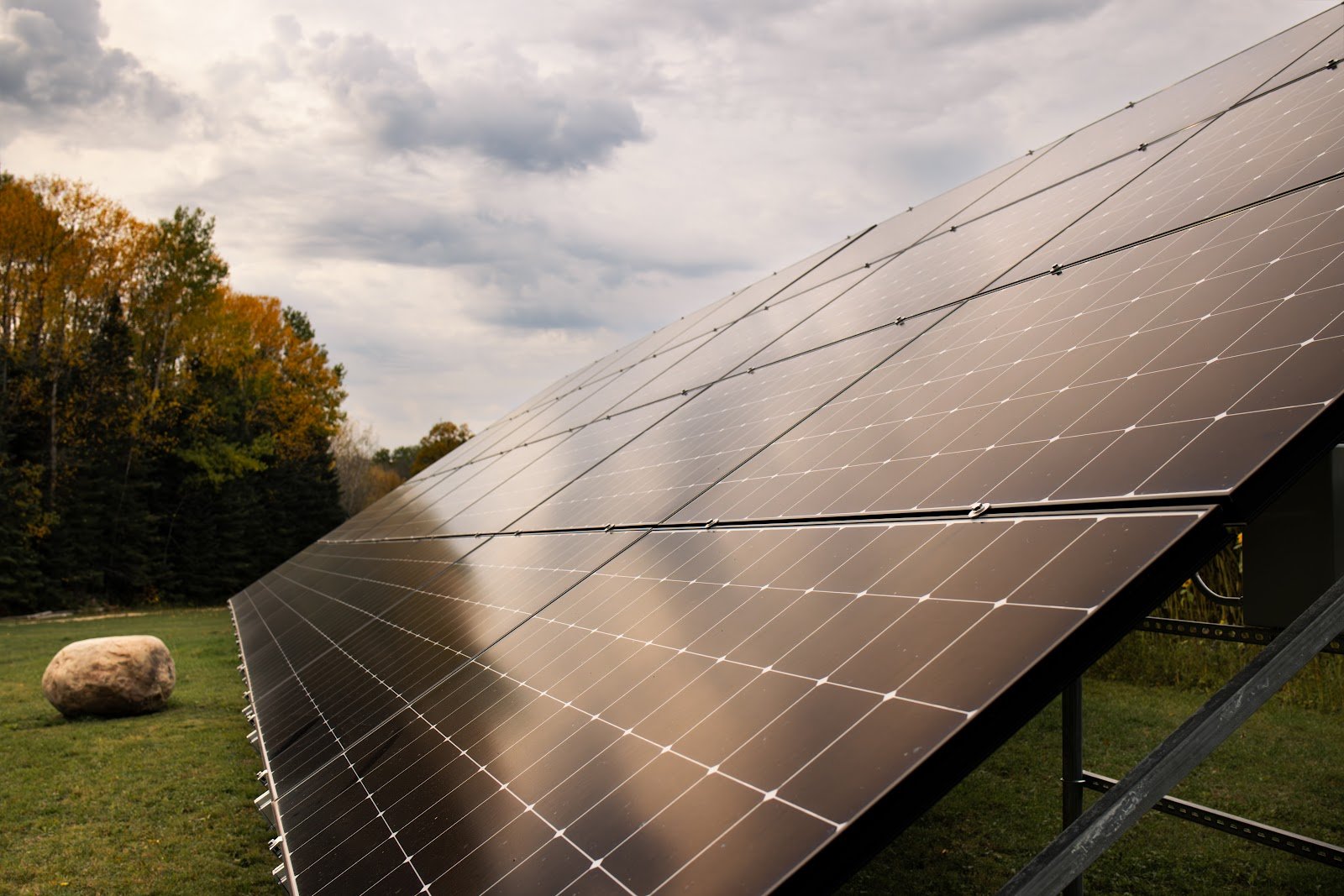
Higher-wattage panels mean fewer panels for the same system size. These are the panels Wolf River Electric installs on homes:
- Waaree 400 W: about 21 square feet each.
- Maxeon 425 W, all black: about 21 square feet each, with high efficiency for tight roofs.
- REC Alpha Pure-RX 460 W: about 21 square feet each.
- Canadian Solar 610 W: about 29 square feet each, so fewer, larger panels.
A 25-panel system of 400 to 460 watt panels needs about 525 square feet of usable roof, plus the clear pathways fire code requires along ridges and edges.
What changes how many panels you need
- Roof direction and shade. South-facing roofs make the most power. East and west roofs make roughly 10 to 20% less, and shade from trees cuts output further, so you may need more panels.
- Snow and short winter days. Panels make much less in December than in June. We size for the whole year, and credits from sunny months help cover winter bills, depending on your utility’s rules.
- Future electric use. An electric vehicle adds about 3,000 to 4,000 kWh a year for typical driving, and a heat pump can add more. Tell us before we design so the system has room to grow.
- Utility size limits. Some programs cap system size. Xcel Energy’s Solar*Rewards, for example, allows up to 120% of your last 12 months of use.
- Your goal. Covering 100% of your yearly use is common, but a smaller system still cuts your bill and locks in the cost of the power it makes.
Common questions
How many solar panels does it take to power a house?
Most homes we install in Minnesota, Wisconsin and Iowa use 8 to 12 kW systems, about 20 to 30 panels of 400 to 460 watts. A small, efficient home may need 12 to 15 panels; an all-electric home with an electric vehicle can need 35 or more.
How many solar panels do I need for 1,000 kWh a month?
About 10 kW: 25 panels at 400 watts, 22 at 460 watts or 17 at 610 watts, on a roof with good sun.
Can solar power my whole house?
Over a year, yes: a system sized to your use can make as much electricity as you use. At night and on cloudy days you still draw from the grid, and credits from sunny hours cover it. To keep the power on during an outage you need a home battery, because grid-tied panels alone shut off when the grid goes down.
Do I need more panels because of Minnesota winters?
Not just for winter. The 1,200 kWh per kW figure already includes the cold, short, snowy months. Cold weather actually helps panel efficiency, and snow often slides off tilted panels within a few days.
How do I get an exact number?
Try our free solar calculator for a quick estimate, or get a free quote. We design from your actual bills, roof measurements and shade, and show your solar cost per kWh next to your utility’s rate. Ready to install? See home solar panel installation.
Free quote
See what solar and backup power can save you
Get a custom design and savings estimate from Wolf River Electric. No cost, no obligation.