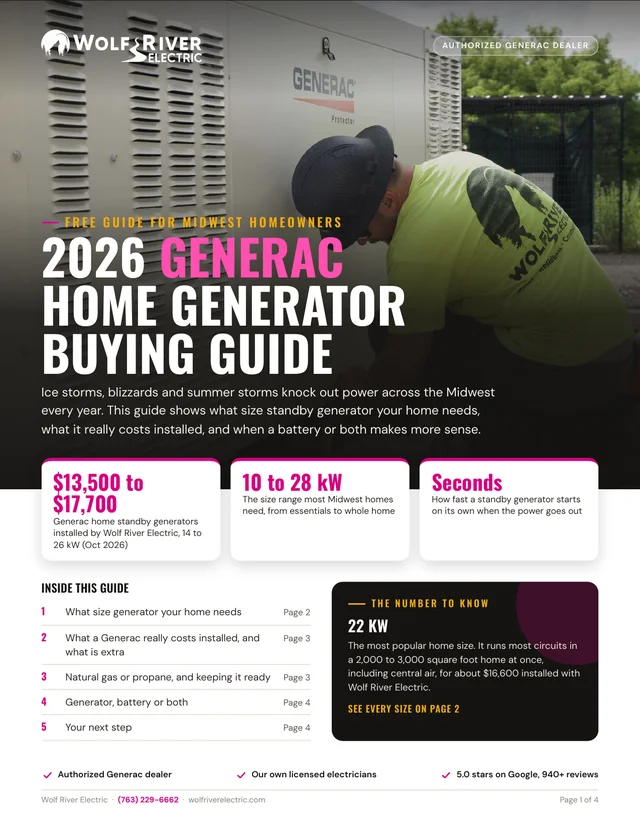
What size generator do I need?
Answer six quick questions about your home and get the generator size an electrician would calculate: the code minimum, our recommendation with room to grow, and a smaller option using load management. Built on the National Electrical Code load calculation, with Generac ratings and our installed prices.
- Uses the NEC 220 load calculation, not a wattage guess
- Checks the motor that is hardest to start
- Adjusts for natural gas or propane and elevation
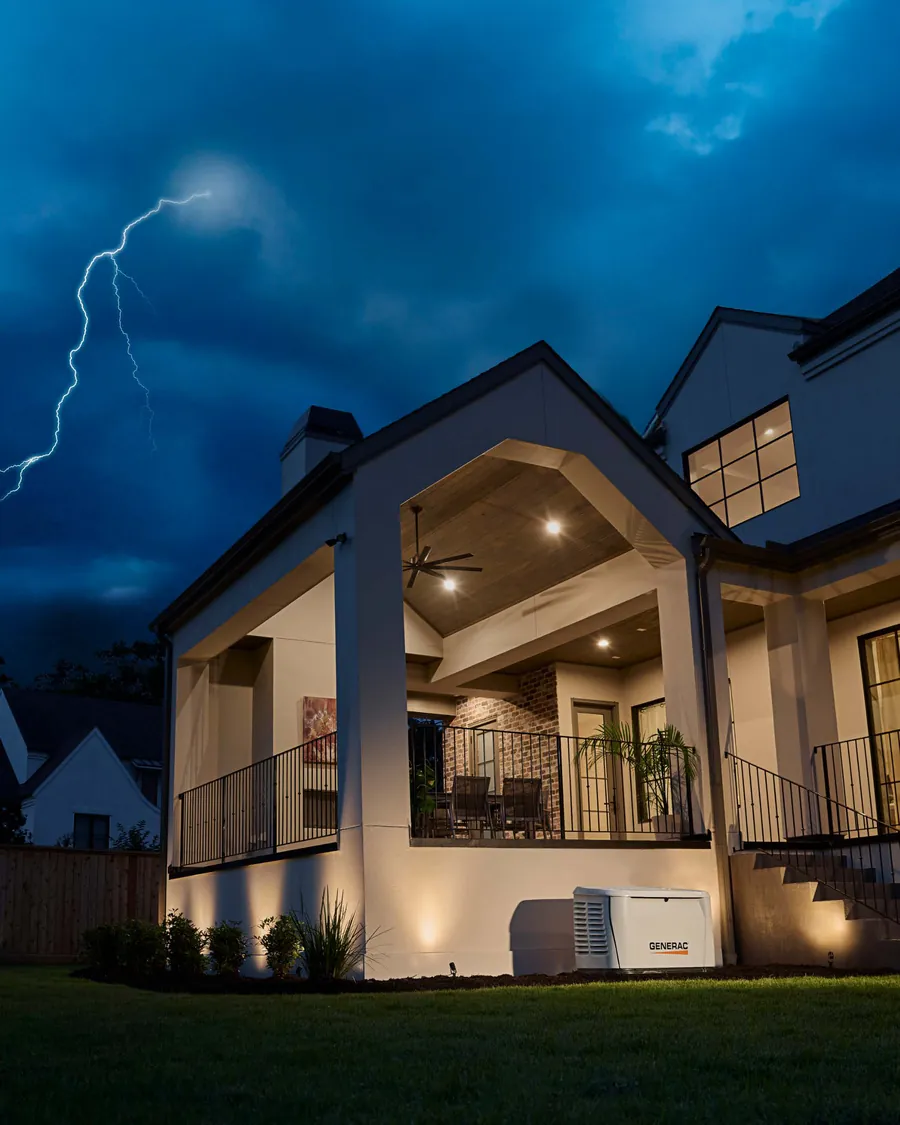
How the calculator sizes your generator
Most online calculators add up running watts. An electrician sizing a standby generator does four checks, and so does this tool.
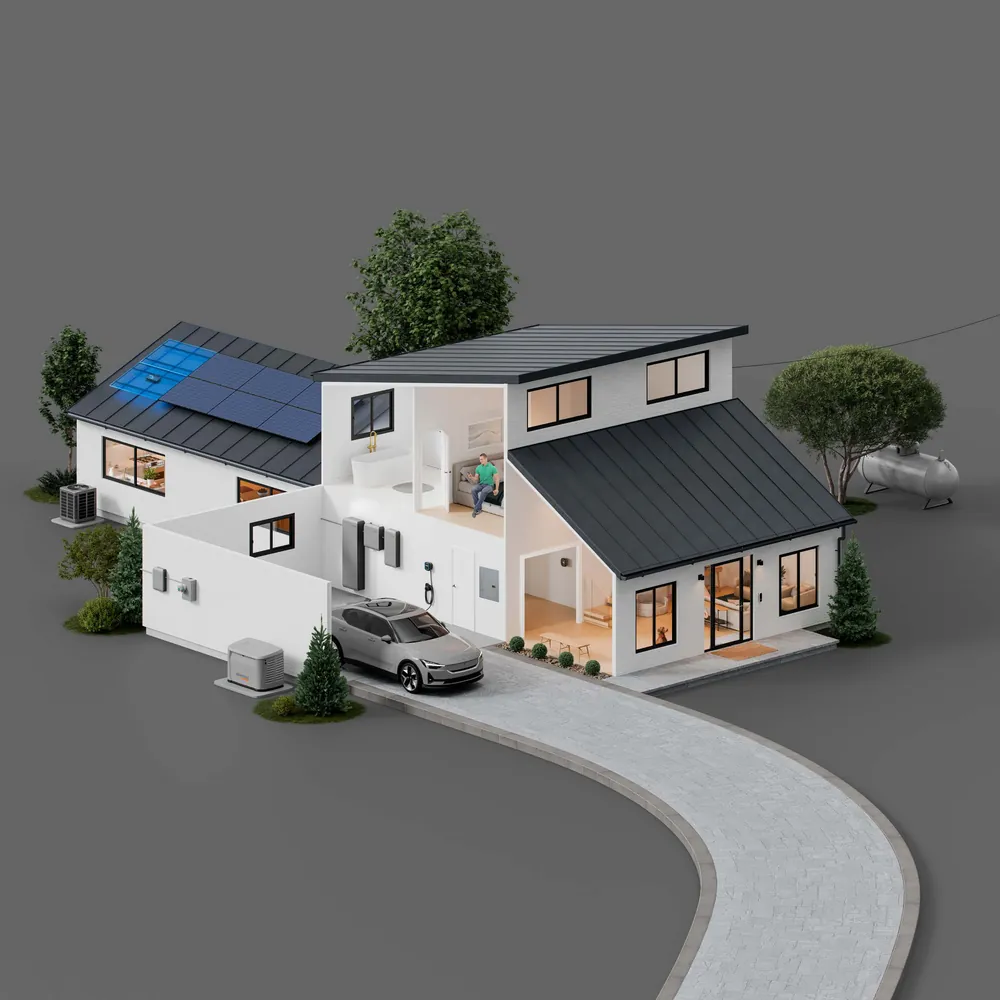
Every circuit in the house counts: lights and outlets, the kitchen, laundry, heating and cooling, the well and sump pumps, and anything big like an EV charger or hot tub.
The load calculation
The National Electrical Code (Article 220) gives the method electricians use to size a home’s service. It counts lighting and outlets by square foot, adds fixed appliances, and applies demand factors, because not everything runs at once. A whole-home generator has to carry that calculated load.
Motor starting
An air conditioner, heat pump or well pump draws several times its running current for a split second when it starts. That surge is measured in locked-rotor amps (LRA). If the generator cannot supply it, the motor stalls and the lights dip. We check your hardest-to-start motor against each model’s rating. A soft starter on the AC lowers that surge by roughly 60%.
Fuel and elevation
Air-cooled generators produce a little less on natural gas than on propane, and lose about 3.5% of output for every 1,000 feet above sea level. Your ZIP code sets the elevation automatically.
Room to grow
The code minimum is the smallest unit that passes. We recommend a unit that runs at no more than 85% of its rating, which leaves margin for cold-weather starts, a future EV or heat pump, and longer engine life.
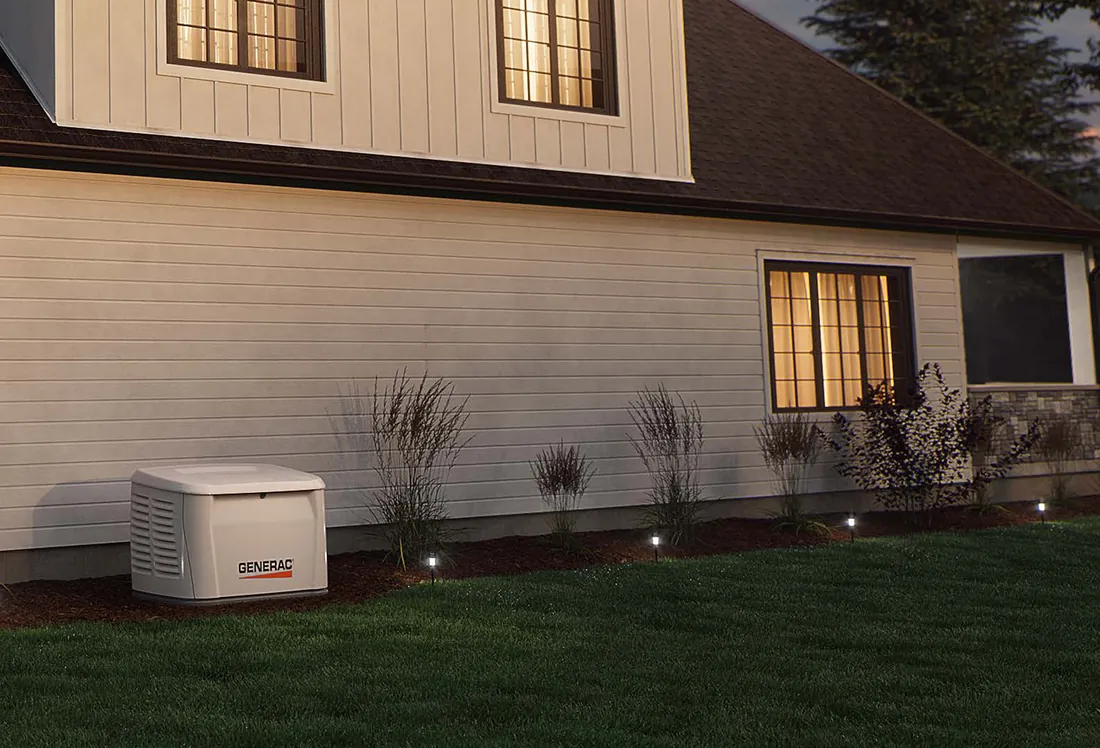
Typical generator sizes for Midwest homes
These come from running the calculator on homes we see every week. Your result depends on your actual appliances and square footage, so treat this as a starting point.
| Home | Size of home | Typical generator | Notes |
|---|---|---|---|
| Essentials only: furnace, refrigerator, sump, lights, outlets | Any size, gas heat | 10 to 14 kW | Smaller transfer switch, lowest cost |
| Gas heat, central AC, gas range and dryer | 1,500 to 2,500 sq ft | 18 kW | The most common whole-home size we install |
| Gas heat, central AC, electric range, dryer and water heater | 2,000 to 2,500 sq ft | 18 kW managed, 24 to 28 kW unmanaged | Load management pauses big loads for a moment |
| Two AC units, electric range and dryer, EV charger | 3,000 to 4,000 sq ft | 22 kW managed | Running everything at once needs a liquid-cooled unit |
| Heat pump with electric backup heat, well pump | 2,000 to 2,500 sq ft | 26 kW managed, 14 kW essentials | Backup heat strips drive the size in winter |
Calculated at 1,000 ft elevation on natural gas. Managed means Generac Smart Management Modules pause the largest loads when the generator nears its limit.
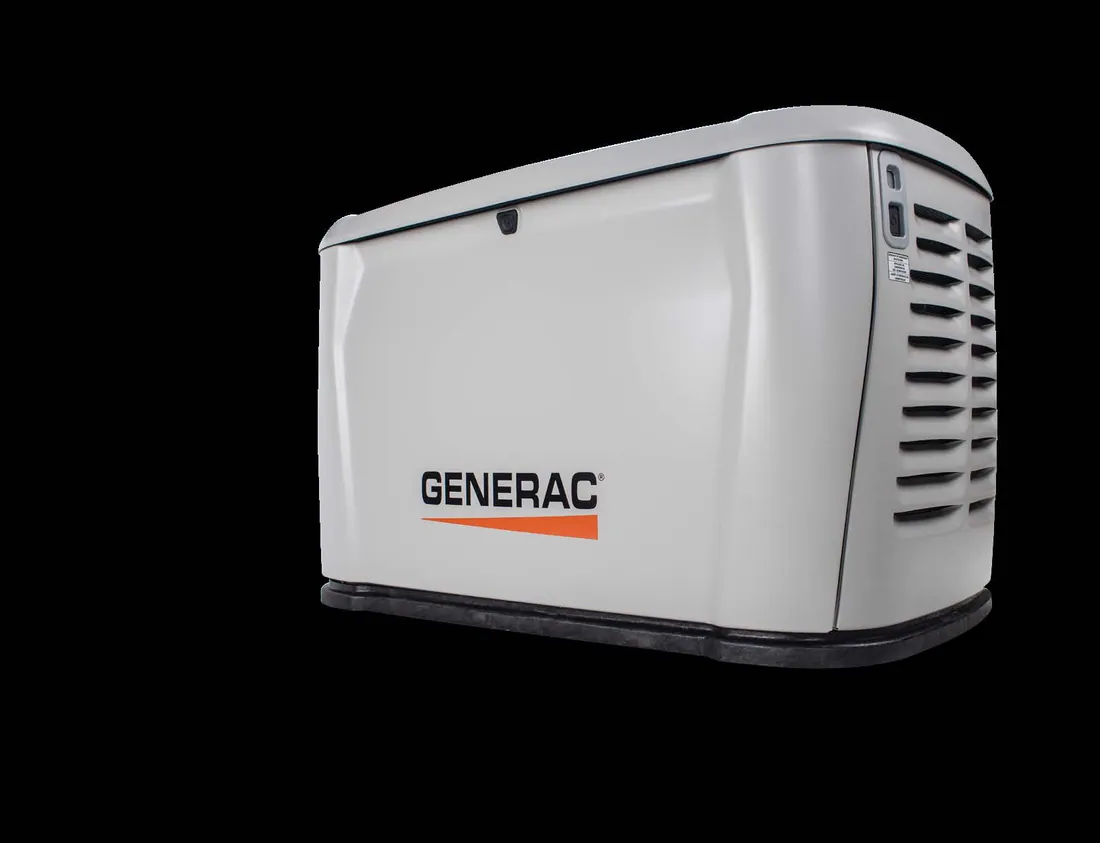
Generac home standby generators, 10 to 28 kW
These are the air-cooled Generac Guardian models the calculator chooses from. Each one starts itself within seconds of an outage and runs on natural gas or propane. Homes that need more power use a liquid-cooled unit, which we size and price during your free consultation.
| Size | Model | Natural gas / propane | Motor starting (LRA) | Fuel at full load (NG / LP per hour) | Installed price |
|---|---|---|---|---|---|
| 10 kW | G007257 / G007321 | 9 / 10 kW | 70 | 132 cfh / 1.6 gal | Quoted at consultation |
| 14 kW | G007258 / G007323 | 14 / 14 kW | 110 | 243 cfh / 2.9 gal | $13,500 |
| 18 kW | G007259 / G007324 | 17 / 18 kW | 150 | 235 cfh / 2.9 gal | $15,500 |
| 22 kW | G007260 / G007325 | 21 / 22 kW | 210 | 311 cfh / 3.7 gal | $16,600 |
| 24 kW | G007261 / G007326 | 22.5 / 24 kW | 230 | 291 cfh / 3.7 gal | $17,300 |
| 26 kW | G007327 / G007328 | 24 / 26 kW | 240 | 316 cfh / 4.0 gal | $17,700 |
| 28 kW | G007282 / G007329 | 25 / 28 kW | 245 | 297 cfh / 4.0 gal | Quoted at consultation |
Ratings from Generac spec sheets. Installed prices are Wolf River Electric prices as of November 2026 and include the generator, concrete pad, battery, automatic transfer switch, permit and installation. Sales tax and the gas or propane line are extra. See what a whole-house generator costs for the full breakdown.
Why a smaller generator can still run the whole house
Your electric dryer, water heater, range, EV charger and second AC rarely all run at the same moment. A Generac Smart Management Module (SMM) watches the generator’s output and briefly switches off one large load when the generator nears its limit, then turns it back on when there is room.
The electrical code allows managed loads to be left out of the generator’s required size. That is why the calculator often shows a third card: a smaller, less expensive generator plus one module per managed load. In practice you rarely notice; the water heater might wait a few minutes while the AC starts.
- Each module controls one 240-volt load
- Air conditioners get a short delay so the compressor restarts safely
- Often saves one or two sizes, and the step up to a liquid-cooled unit

Natural gas or propane?
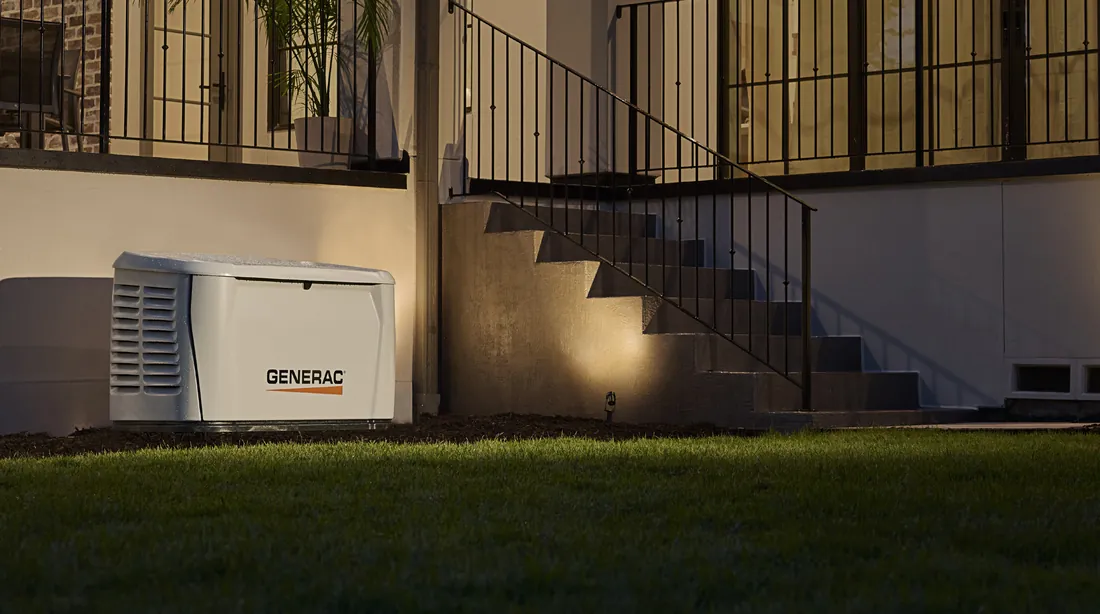
Natural gas never runs out, but larger generators can draw more gas than a standard home meter delivers. The calculator flags that so we can check with your gas utility.
Propane generators need a tank sized for the outage you are planning for. An 18 kW generator at half load uses about 1.7 gallons an hour, so a 500-gallon tank filled to 80% runs it for about a week. In deep cold, a small tank cannot turn liquid into gas fast enough for a big generator, so your propane supplier confirms the tank size.
Generator installation · Generac models · Propane vs natural gas · Generator sizing guide
Methodology
Load calculation
Both NEC 220 methods are calculated and the smaller result is used, as the code allows. Part III (standard method): 3 VA per square foot (2023 NEC) or 2 VA (2026 NEC), small-appliance and laundry circuits at 1,500 VA, the 3,000 VA / 35% demand factor, fixed appliances at 75% when there are four or more, cooking by Table 220.55, dryers at 5,000 VA minimum, the larger of heating or cooling, EV chargers at 7,200 VA minimum, and 25% of the largest motor. Part IV (optional method, 220.82): general loads at 100% of the first 10,000 VA (8,000 VA in the 2026 NEC) plus 40% of the rest, plus heating or cooling per 220.82(C).
Motors, derating and selection
Starting current uses the nameplate locked-rotor amps when you enter it in pro mode; otherwise 6.9 times running amps. 120-volt motors count at half as a 240-volt equivalent, and a soft starter removes about 60%. Output is derated 3.5% per 1,000 ft. The code minimum is the first model whose derated rating is greater than the calculated load and whose LRA rating covers the largest motor; the recommendation also keeps the load at or below 85% of the derated rating. Under the Essentials setting, only the circuits you would move to a subpanel are counted, plus a 3,000 VA allowance.
Turn on Pro mode in the calculator to choose the NEC edition and method, set circuit counts, edit every load’s watts, volts and LRA, and mark loads as managed. The calculator matches Generac’s own sizing results when set to the optional method. Engine version: Nov 2026.
Questions we hear
What size generator do I need to run my whole house?
Is a 22 kW generator big enough for a 2,500 sq ft house?
Can a generator be too big?
What happens if my generator is too small?
Do I need a whole-home generator or just essentials?
How accurate is this generator calculator?
How long will a propane tank run a generator?
Get your generator sized for free
We check your panel, gas meter or propane tank and appliance nameplates, then confirm the generator size and installed price before anything is ordered. As an authorized Generac dealer, we handle the permit, gas line coordination, installation and startup.
Estimates only, based on the information entered. Final size and price are confirmed during a free consultation. Prices exclude sales tax and the gas or propane line. Generac and Guardian are trademarks of Generac Power Systems, Inc.; images courtesy of Generac.