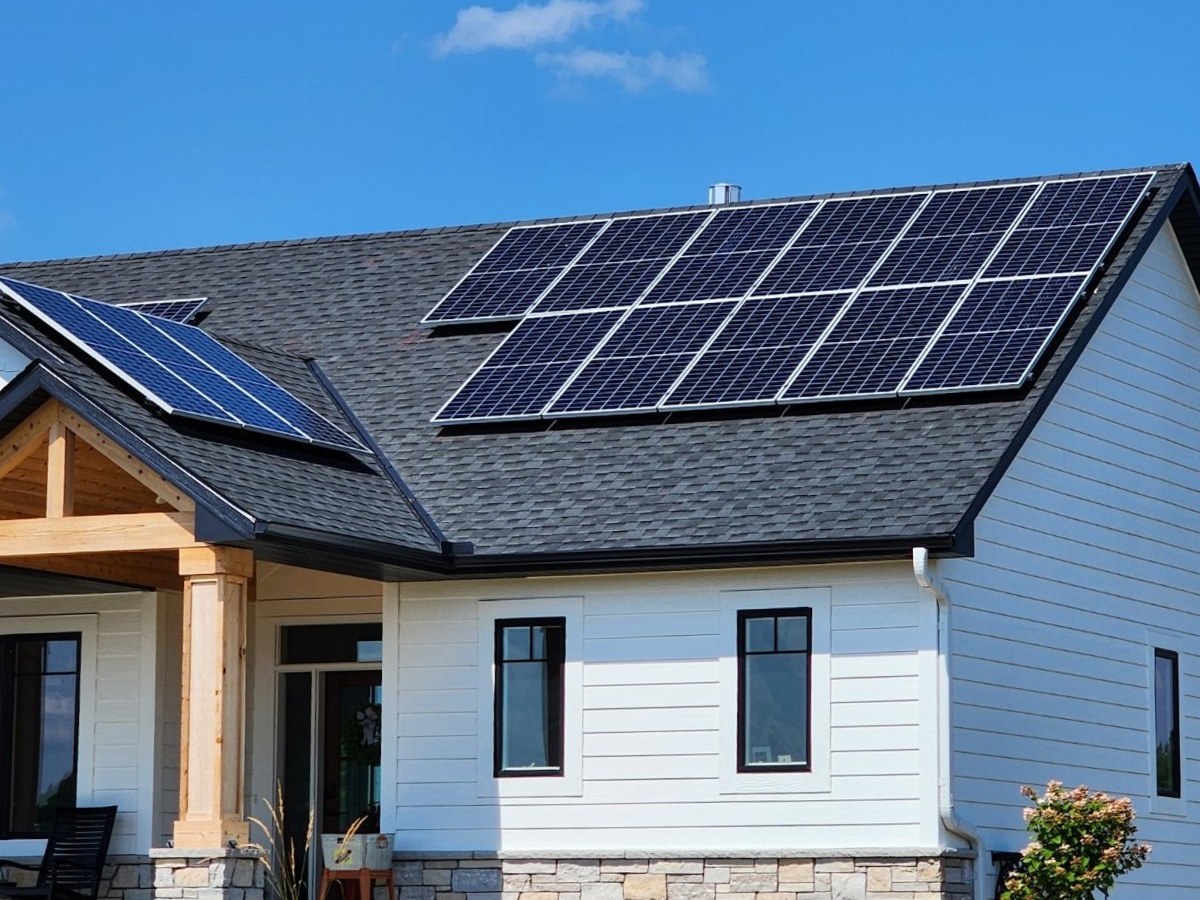
Updated November 2026 by Wolf River Electric, a Midwest solar installer that serves South Dakota homes, farms and businesses with its own crews.
We install solar in South Dakota, so we have a stake in this question. That is why this page does not rank companies. It gives you a checklist that works on any installer, including us, and shows our own numbers so you can check them.
How do you choose the best solar company in South Dakota?
Price matters, but the lowest price is not the best value if the crew, the equipment or the warranty is weaker.
The installer matters as much as the panels. Most problems with home solar come from how it was installed and who answers the phone years later, not from the panels themselves.
In South Dakota, system size and timing matter too. Solar you use at home is worth the full retail rate, but extra power sent to the grid earns a much lower buyback rate. A good installer designs around your real use.
The South Dakota solar installer checklist
Use this to judge any installer. The right column shows how Wolf River Electric answers each item.
| What to check | How to check it | Wolf River Electric |
|---|---|---|
| South Dakota electrical license | South Dakota licenses electrical contractors and electricians through the State Electrical Commission. You can look up a license from the Department of Labor and Regulation. South Dakota does not license general contractors statewide, so also ask about any license your city requires. | Licensed in all operating states. |
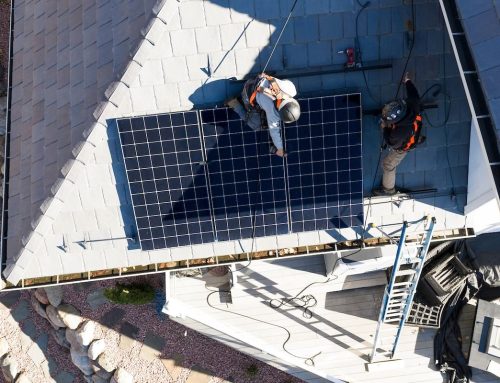
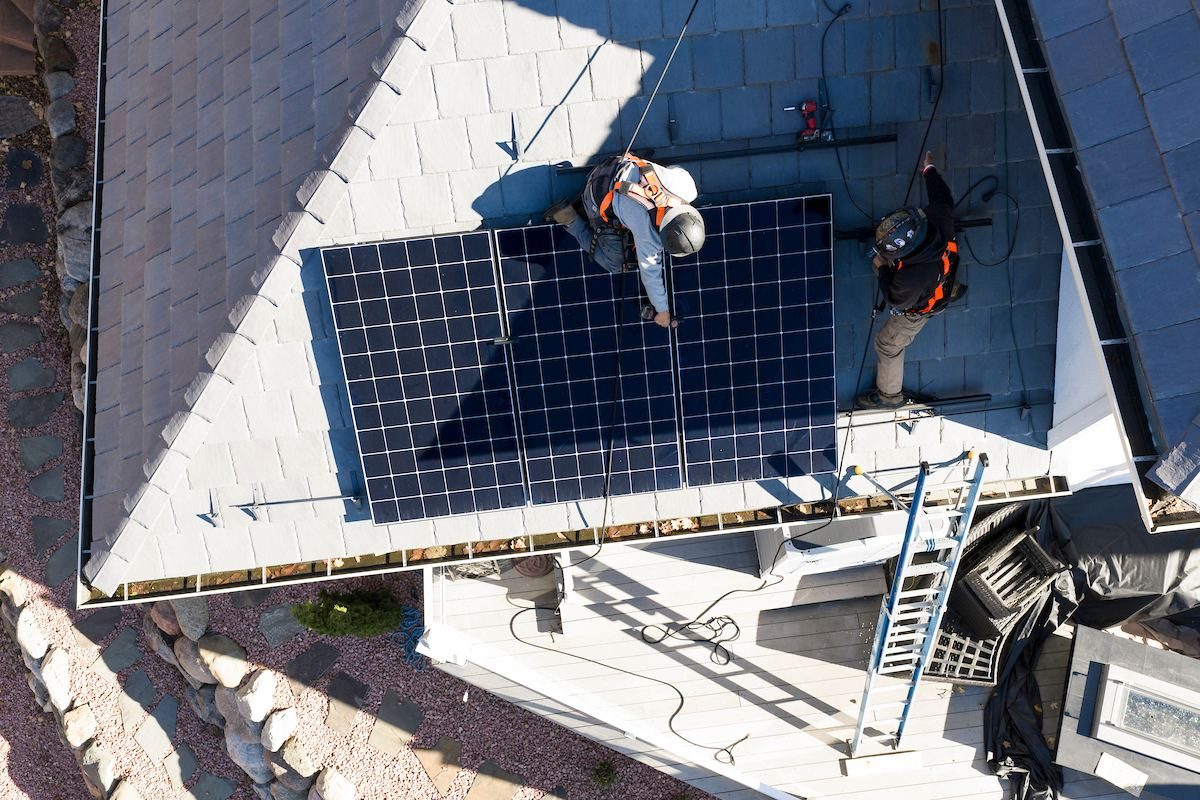
| Who installs | Ask if the crew on your roof are the company’s own employees or a subcontractor, and who the electrician is. | Our own licensed crews. |
| Local service | Ask where the crew comes from and who comes out when something needs service. | Our own crews serve South Dakota. Service visits by appointment. |
| Track record | Check how long the company has been in business and how many homes it has done near you. A license issued in the last two years deserves a closer look. | In business since 2014, with more than 10,000 projects completed across the Midwest. |
| Reviews | Read recent Google reviews, not only the star rating. Look for reviews that mention the crew and service after the install. | More than 900 Google reviews, 5.0 average (November 2026). |
| Certification | NABCEP is the main solar industry certification. Ask who holds it. | NABCEP-certified company. |
| Workmanship warranty | Get the workmanship warranty in writing: how long it lasts, what it covers and who pays for repairs. Panel and inverter warranties come from the maker. | 25-year workmanship warranty on home solar. |
| Equipment | The quote should list panel, inverter and battery brands and model numbers. | Q CELLS, REC, Silfab, Enphase, Tesla, FranklinWH and other major brands. |
| Clear price | Ask for the price per watt and what is included: permit, electrical upgrades, monitoring. | Ask for it on your quote. See South Dakota prices below. |
| Paperwork | Ask who handles the permit and the interconnection with Xcel Energy, Otter Tail Power, Black Hills Energy, NorthWestern Energy or your co-op. | Permits and utility paperwork handled by our team. |
| Right-sized system | Without statewide net metering, extra power earns far less than the power you use at home. Ask how the system size compares with your yearly use. | Sized to the power you use, from 12 months of your bills. |
| Production estimate | Ask for expected kWh per year and how it compares with real systems near you. | Real output from our South Dakota systems, shown below. |
| Payment schedule | Ask when each payment is due and what it is tied to. | Listed in your contract. |
Red flags to watch for
- “Free solar” or “government program” pitches. Solar is not free. An offer that calls panels free usually hides a lease or loan in the paperwork.
- No price per watt or no named equipment. A clear quote shows both.
- Savings that count the federal tax credit on a home you buy. That credit ended for homeowners after 2025.
- Savings that value every kWh at the retail rate. South Dakota has no statewide net metering, so extra power you send to the grid earns your utility’s much lower buyback rate.
- No license you can find. Or a license so new the company has little work to show.
- No plan for service. Ask who comes back for warranty work and how long it takes to get a crew out.
- Reviews that all arrived in a few weeks or never mention the install.
How Wolf River Electric measures up
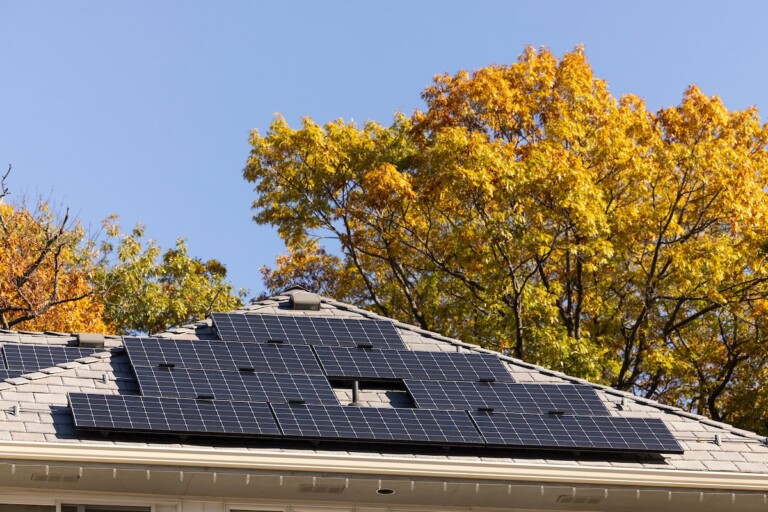
Here is our side of the checklist, with facts you can check.
- Licensed in all operating states, with our own crews.
- Our own crews serve South Dakota homes, farms and businesses. Call (763) 229-6662.
- In business since 2014, with more than 10,000 projects completed across the Midwest.
- NABCEP-certified company.
- More than 900 Google reviews with a 5.0 average, as of November 2026. Read our reviews.
- A 25-year workmanship warranty on home solar.
- We install Q CELLS, REC, Silfab, Canadian Solar, Enphase, Tesla Powerwall 3 and FranklinWH.
- We also install battery backup, standby generators and ground mounts for farms and acreages, and we service systems from installers that closed.
What our customers say on Google
“Wolf River Electric took over our solar project after the initial company went out of business.”
“The team was professional, communicated well throughout the process…”
“Wolf River Team did a great job and cleaned up the site like they were never there when done.”
5.0 stars from more than 900 Google reviews. Read our Google reviews or see more on our reviews page.
How much power do Wolf River Electric systems make in South Dakota?
Wolf River Electric systems in South Dakota with a full year of Enphase monitoring made about 504 kWh per panel from October 2025 to September 2026. A typical home system of 20 to 30 panels makes about 10,080 to 15,120 kWh a year. Used at home, that power is worth about $1,470 to $2,204 a year at South Dakota’s average home electricity price. Extra power sent to the grid earns less.
| Season | kWh per panel |
|---|---|
| Winter (December to February) | 72.3 |
| Spring (March to May) | 156.3 |
| Summer (June to August) | 180.0 |
| Fall (September to November) | 95.9 |
| Year | 504 |
Averages of real production from Wolf River Electric customers’ systems. Value at South Dakota’s average home electricity rate (U.S. EIA, 2026).
What solar costs in South Dakota in 2026
As of November 2026, solar in South Dakota averages about $3.46 per watt before incentives, according to EnergySage. That is about $34,600 for a 10 kW system. Steep or complex roofs, ground mounts, electrical panel upgrades and batteries add cost.
South Dakota has no statewide net metering. Solar you use at home offsets the full retail rate, about 14.58 cents per kWh on average in 2026, and extra power earns your utility’s buyback rate. For systems under 5 MW, the first $50,000 or 70% of the value solar adds is exempt from property tax, whichever is more. South Dakota has no state income tax, so there is no state solar tax credit. For details, see what solar costs in South Dakota and whether it is worth it and our 2026 Midwest solar incentives guide.
Solar Incentive GuideWolf River Electric
Free download
Get the 2026 South Dakota Solar Incentive Guide
Every 2026 program in plain terms, in 4 pages. We email you a copy too.
- How solar is credited without statewide net metering
- The property tax exemption: 70% or $50,000 of the value solar adds
- Real production from our South Dakota systems
Download the guide (PDF)
Questions to ask any South Dakota solar installer
- Do you hold a South Dakota electrical contractor license?
- Will your own employees install my system?
- Which exact panels, inverters and battery will I get?
- What is the price per watt, and what is not included?
- How much power will the system make in year one, and how much of it will I use at home?
- Who handles the permit and the utility interconnection?
- How long is your labor warranty, and who do I call for service?
- When is each payment due?
For the full list, see questions to ask a solar installer before you sign.
South Dakota solar company FAQ
Who is the best solar company in South Dakota?
No single company is best for every home. The best one for you is licensed in South Dakota, installs with its own crews, can send a crew back for service, names your equipment in writing and backs its labor for years. Use the checklist above to judge any installer you talk to, including us.
Does South Dakota have net metering?
No. South Dakota has no statewide net metering. Solar you use at home offsets the full retail rate, and extra power earns your utility’s buyback rate. Otter Tail Power pays about 4.6 cents per kWh plus 0.3 cents for renewable energy credits. Xcel Energy, Black Hills Energy, NorthWestern Energy and Montana-Dakota each file their own rate with the South Dakota Public Utilities Commission.
Does South Dakota tax solar?
South Dakota charges no state income tax. For systems under 5 MW, the first $50,000 or 70% of the value solar adds to your property is exempt from property tax, whichever is more. Your county Director of Equalization handles it.
Is a local solar installer better than a national company?
For service, often yes. An installer whose crews work in your area can come back when something needs attention, and it knows your utility and local permit offices. Some national companies subcontract installs. Ask who will do the work and who will service it.
What should a solar quote include?
The system size, expected yearly production, the panel, inverter and battery brands and models, the total price and price per watt, what is included, the labor warranty and the payment schedule. If any of these are missing, ask for them in writing.
How do I check a solar company’s license in South Dakota?
Look up the company’s electrical contractor license through the South Dakota Department of Labor and Regulation, and make sure it is active. Ask your city whether it requires a local license too.
Is solar worth it with South Dakota winters?
Our South Dakota systems made about 72.3 kWh per panel in winter and 180 kWh in summer, about 504 kWh for the year. Snow and short days cut winter output, so most of your yearly power comes from spring to fall. Cold itself does not hurt panels; they work more efficiently in cool weather.
Are free solar panel offers real?
No. Solar is paid for with cash, a loan, a lease or a power purchase agreement. An offer that calls the panels free usually has a lease or loan in the paperwork.
Can I still get a solar tax credit in South Dakota?
Not when you buy. South Dakota has no state income tax or state solar credit, and the federal homeowner credit ended after 2025. A solar lease or prepaid lease can still use a federal credit for a limited time, which can lower your price.
Free quote
See what solar and backup power can save you
Get a custom design and savings estimate from Wolf River Electric. No cost, no obligation.