AI compute hosting · Guide 12 of 17
Put generation in now and add AI nodes when the site is ready. A phased plan for revenue and offtake.
*Estimates using current program numbers (730 contracted hours a month). Not an offer or a promise of income.
Updated November 20, 2026 by Wolf River Electric.
Why build generation now
- The credit deadline. Solar projects that did not begin construction by July 4, 2026 must be placed in service by December 31, 2027 to qualify for the federal credit under the 2025 law, per SEIA. Storage is not held to that placed-in-service deadline. Confirm your project's eligibility with your tax advisor.
- The money is moving. Amazon, Microsoft, Alphabet and Meta were projected to spend about $725 billion on AI infrastructure in 2026 (Techstrong.ai, May 2026), and Wood Mackenzie calls the build-out a supercycle of infrastructure investment. Owning power is the picks-and-shovels play.
- Power is the bottleneck for AI. Data center vacancy fell to about 1% in 2026, and utility connections for large new loads can take five to ten years (FTI Consulting, September 2026). The industry calls the race for available power “speed to power.”
- Behind-the-meter is the trend. Long interconnection queues are pushing developers toward generation built on site, behind the meter (Wood Mackenzie, October 2026). A solar site with spare capacity is exactly what distributed AI networks look for.
- The Midwest grid is getting tighter. NERC expects about 18 GW of new data center load in the MISO region by 2035 (POWER Magazine).
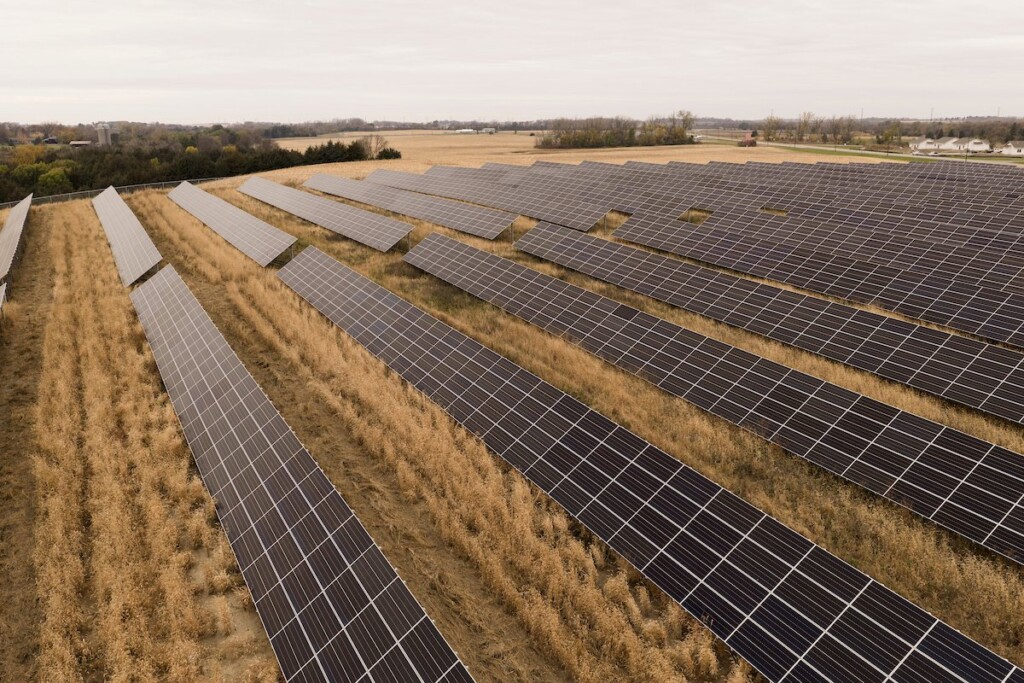
The three phases
| Phase | What gets built | How it earns |
|---|---|---|
| 1. Generate (now) | Solar, often with battery storage, plus AI-ready infrastructure: spare electrical capacity, conduit, a pad or room, and a fiber path | Lower or no electric bills, plus offtake: net metering credits or a power purchase agreement for extra power |
| 2. Host (when ready) | One or more AI nodes, each an 8-GPU server cabinet, wired to the power you already make | Your nodes buy your own power behind the meter, and, as owner and host, you keep 80% of AI compute and storage revenue |
| 3. Scale (down the road) | More nodes or a small modular facility on the same site, with more battery capacity | Each added node earns on infrastructure you already paid for |
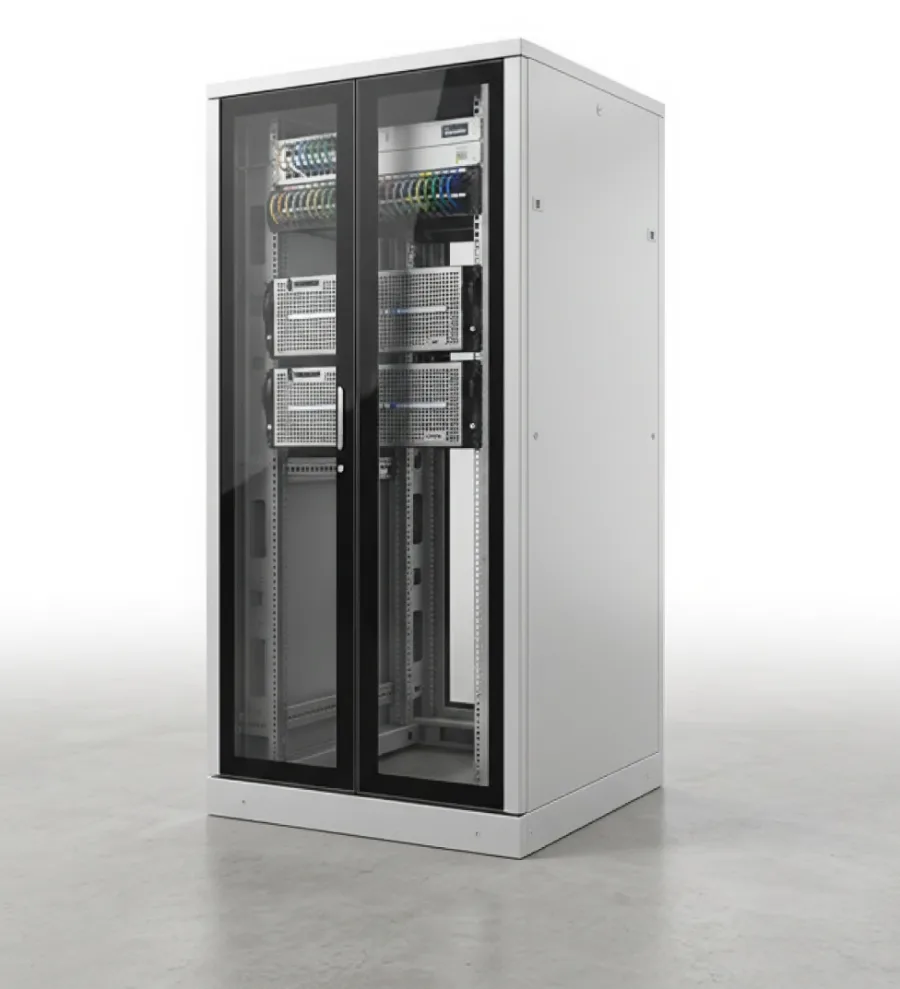
Why AI nodes change the value of your power
Here is the math that makes AI hosting different. Solar on your own roof or land costs about 6 cents per kWh over its life after the federal credit. The utility charges about 14 cents; the U.S. commercial average was about 14.5 cents in August 2026. Extra solar sold back to the grid is credited at the retail rate or about half of it in most of our markets. Inside an AI node, that same kWh becomes computing time that cloud customers pay roughly $4 to $16 for: in October 2026, major clouds listed Nvidia H100s at about $5.40 to $6.88 per GPU-hour and the newest B300s at about $15 to $17.80, against roughly 0.7 to 1.8 kW of power per GPU (Safeguard, October 2026). Host programs pay a share of a lower wholesale rate, which in our examples still works out to about $2.40 to $3.40 per kWh the node uses: 17 to 24 times retail power and 40 to 57 times what solar costs to make. Rates move with the market, so we always test cautious cases.
A worked example: solar farm now, AI nodes in year 3
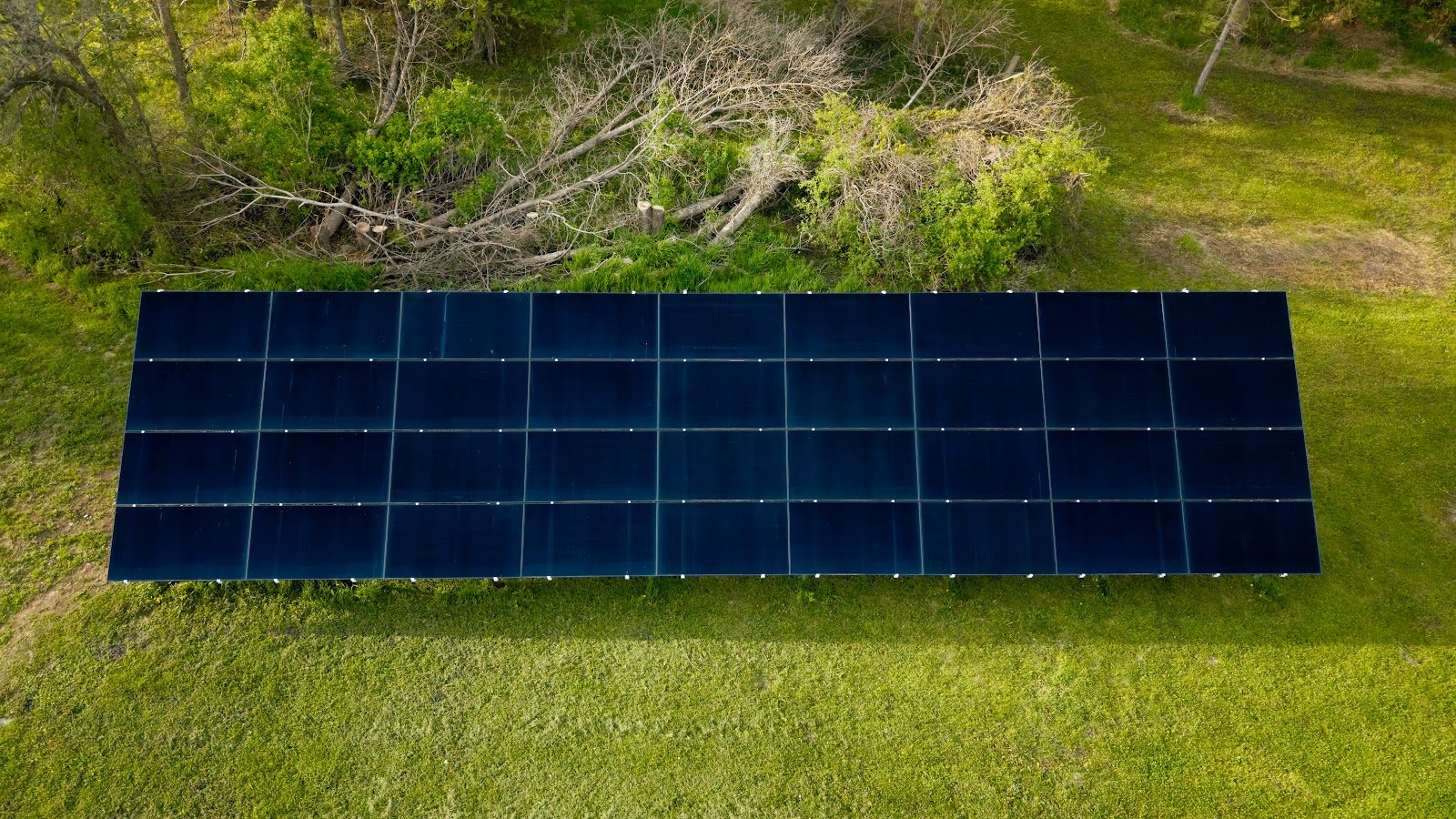
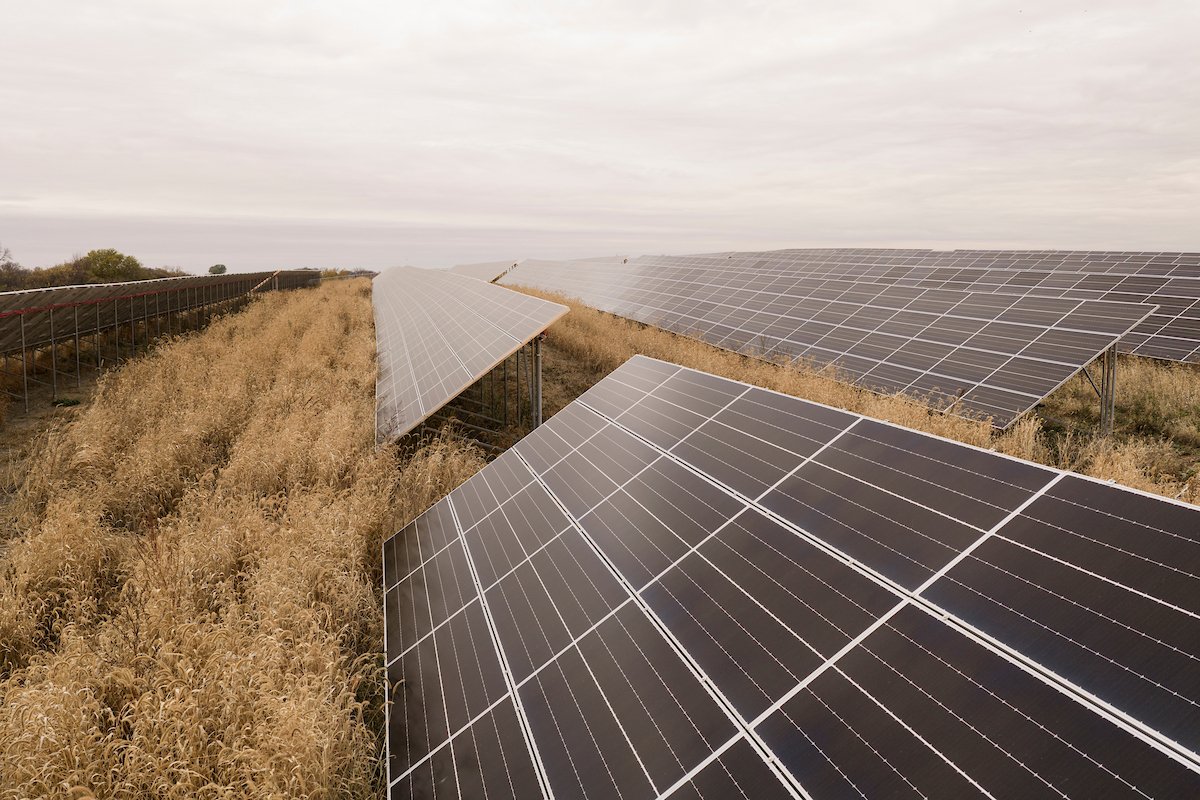
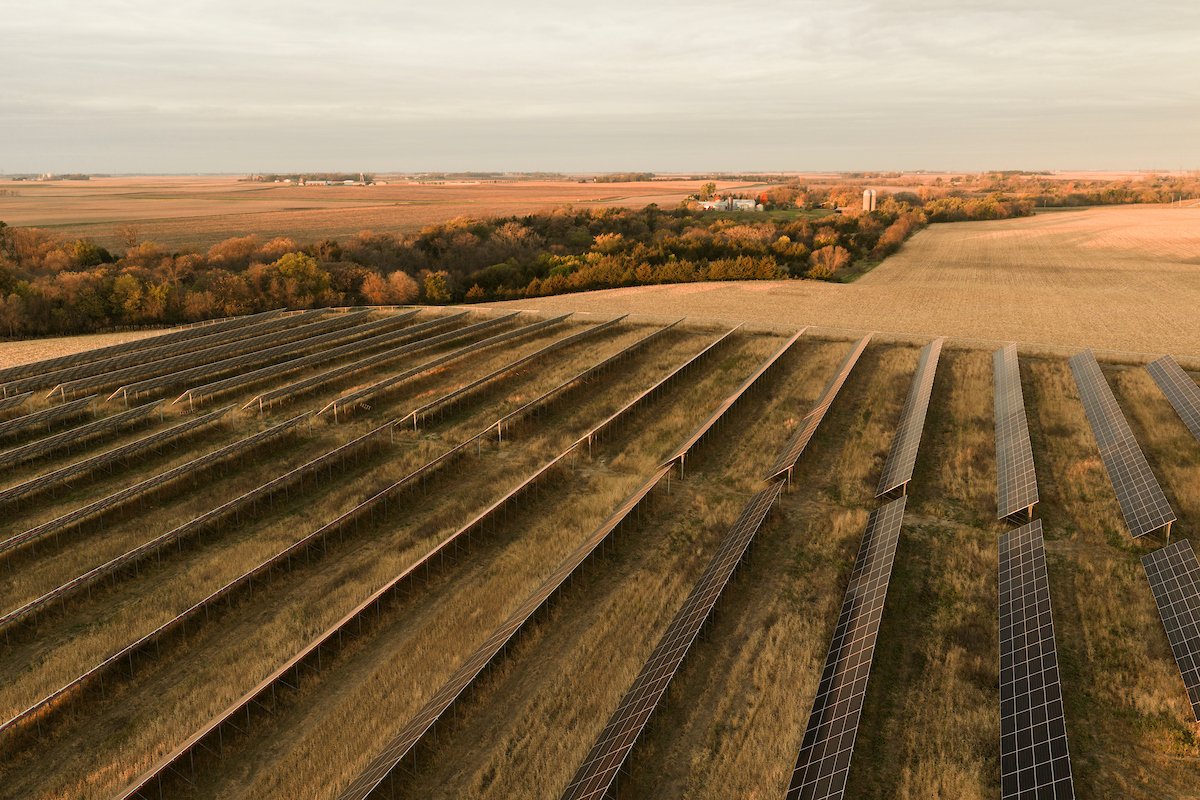
Take a 400 kW ground-mount array in Minnesota at about $2.25 per watt, financed over 25 years, with a farm using $800 a month of power. Extra solar sells at 8 cents per kWh. Two RTX PRO 6000 AI nodes go live in year 3, rented for the program's 730 contracted hours a month, on 7-year loans.
| Period | Estimated result vs doing nothing | Why |
|---|---|---|
| Years 1 and 2 (generation only) | About $14,000 a year behind | Most of the power is exported at 8 cents while the solar loan is paid; depreciation and tax benefits are not counted |
| Years 3 to 9 (two AI nodes live) | About $99,000 a year ahead, after all loans, power and internet (about $54,000 at 80% of hours) | The nodes use solar on site and earn hosting revenue |
| Monthly in year 3 | About $7,500 a month positive, versus an $800 power bill before | Both power bills are replaced and the hosting revenue covers the server loans |
The lesson is honest: solar that mostly exports may not fully pay for itself when financed. Solar used on site, by buildings, farm loads or AI nodes, is where the value is. Change any number in the AI compute and solar planner; with net metering or a higher offtake price, the early years look much better. Estimates only, not promises.
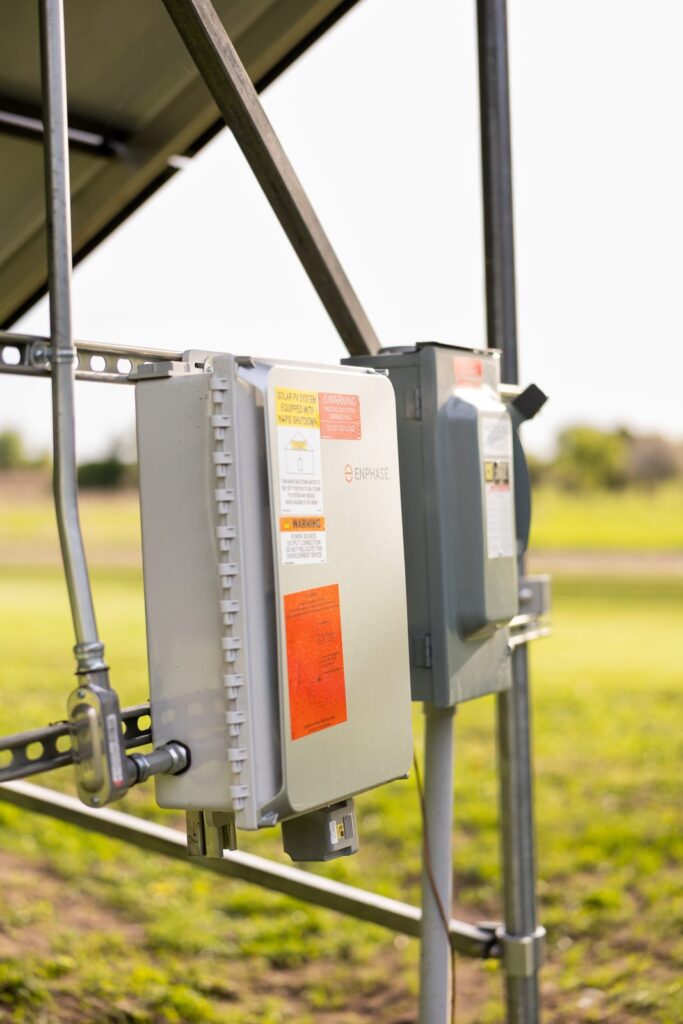
What AI-ready means at build time
- Transformer and service sized for the AI load you plan to add, not just today's use
- Conduit and pull boxes from the array and switchgear to the future node location
- A pad, enclosure space or room for server cabinets, cooling and a UPS
- A planned fiber route to the site
- Metering set up so future nodes can use solar behind the meter
- Battery-ready wiring for uptime and solar shifting
Details are on our AI-ready solar farm and powered land guide.
Who this fits
- Farms and landowners with acreage near three-phase power
- Businesses with land or large roofs that want to lock in solar now
- Owners of existing solar who export a lot of power at low credit
- Anyone who wants AI compute revenue later without rebuilding the electrical system
Questions about the phased plan
Can I build solar now and decide on AI nodes later?
Yes. The solar serves your buildings and offtake on its own. AI-ready prep keeps the door open at a lower cost than retrofitting later.
What if AI demand drops before I add nodes?
Then you keep a solar system that cuts your bills for 25 years or more. You only buy servers when the numbers make sense.
Can my utility let me build solar bigger for future AI load?
In Minnesota, systems over 40 kW that earn compensation are limited to 120% of the energy used on the property (Minnesota PUC). A planned load usually has to be documented before it counts, so we plan the phases with your utility.
What does SI have to do with my farm?
AI companies chasing more capable systems, some talking openly about superintelligence (SI), need far more computing power than the grid can deliver quickly. Distributed AI nodes on sites that already make power are one way that demand gets met.
Plan your phases
We design the generation, the AI-ready infrastructure and the offtake together, then show you each phase in numbers. Request an AI compute site assessment or call (763) 229-6662.
AI compute packages
One 8-GPU server each. Estimated using current program numbers.
Before loan payments and taxes, at 730 contracted hours a month and 10¢ power. Rental demand and rates can change; revenue is not guaranteed. Compare packages
Free quote
See what your site could earn hosting AI compute
Get a free AI compute site assessment from Wolf River Electric: power, solar, hosting space and fiber. No cost, no obligation.