Updated October 2026 by Wolf River Electric, a solar installer for Midwest farms and rural businesses.
What is agrivoltaics?
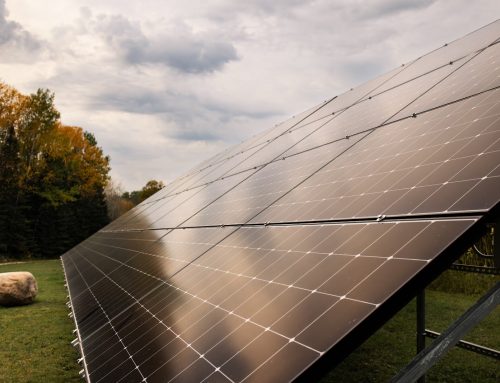
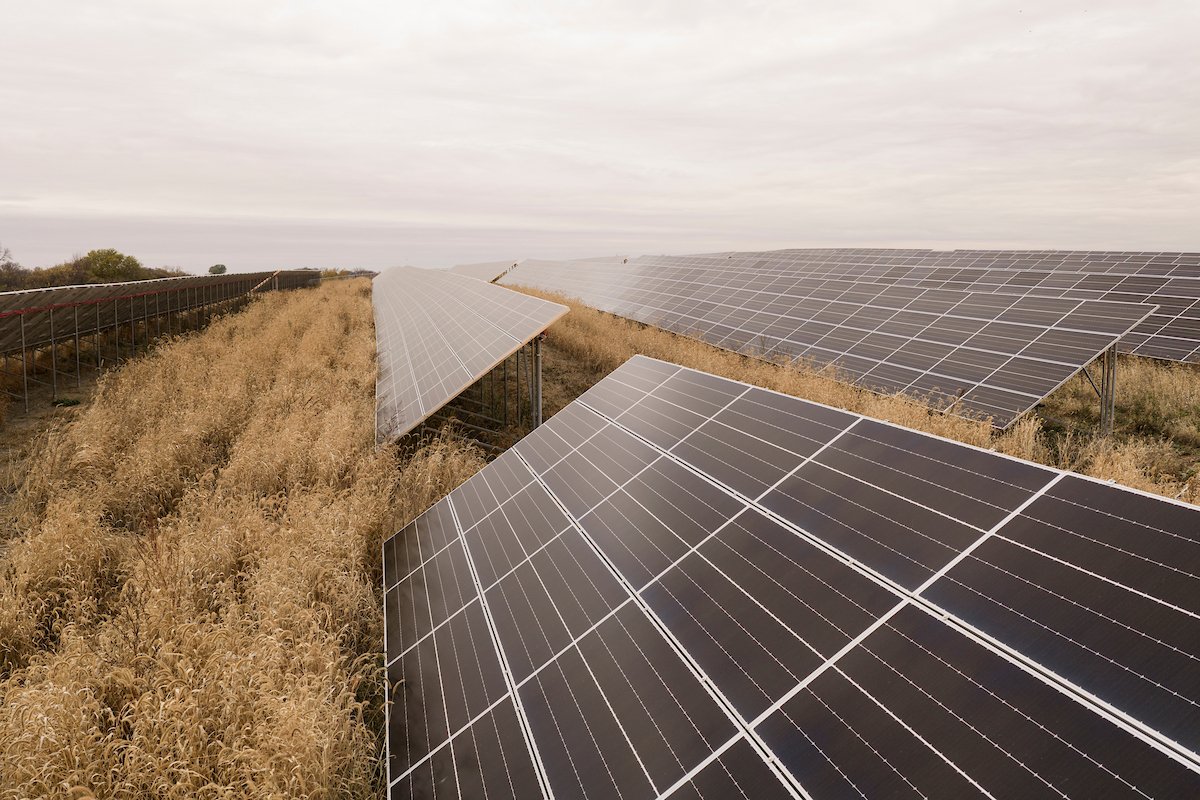
Agrivoltaics, also called dual-use solar or agrisolar co-location, puts solar panels and farming on the same acres. The National Renewable Energy Laboratory groups it into three main types: livestock grazing, crop production and pollinator or native habitat. The panels make electricity while the land underneath keeps producing.
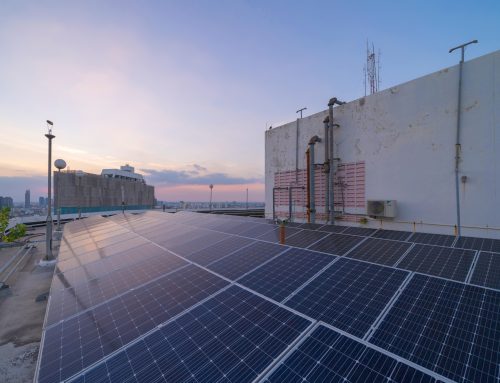
It is different from a regular farm solar system. Most farm solar today sits on a barn roof or a small ground mount that powers the farm’s own wells, shops and grain dryers. Agrivoltaics is about designing the array so farming continues underneath and around it.
The three main types of agrivoltaics
| Type | How it works | Best fit in the Midwest |
|---|---|---|
| Solar grazing | Sheep, and on taller arrays cattle, graze the vegetation under and between panel rows | Pasture and hay ground, sheep or beef operations |
| Crops with solar | Shade-tolerant crops or forage grow between widely spaced rows or under raised panels | Specialty crops, forage, small farms |
| Pollinator habitat | Native prairie plants under the panels support bees and other pollinators | Sites near orchards, apiaries or row crops |
Agrivoltaics research in Minnesota
The University of Minnesota’s West Central Research and Outreach Center in Morris runs an agrivoltaics project on a working dairy farm, with solar panels raised eight feet off the ground so cattle can graze and rest in the shade. The research looks at cow comfort during heat, milk production and a second income stream for farmers. Minnesota also runs a Habitat Friendly Solar program through the Board of Water and Soil Resources for solar sites planted with pollinator habitat.
What to plan for before you build
- Panel height and spacing. Sheep graze under standard ground mounts. Cattle and crops need taller racking and wider rows, which cost more.
- Livestock-safe wiring. Wiring and connectors need protection from chewing and rubbing, and the array needs fencing that fits your animals.
- Equipment access. Rows have to be wide enough for the mowers, balers or sprayers you use.
- Soil and drainage. Footings and trenching should avoid tile lines and keep the soil productive.
- Zoning and permits. County and township rules for solar on agricultural land vary. Check them early.
- Grid connection. Your utility’s interconnection rules decide how big the system can be and how exported power is credited.
- Insurance and leases. If someone else owns the array or grazes the land, put the terms in writing.
Costs and incentives for farm solar
Raised racking and wider spacing make agrivoltaic arrays cost more per watt than a standard ground mount. Farms and other businesses can still use the 30% federal commercial credit for solar placed in service by the end of 2027, or started by July 4, 2026, and can depreciate solar on a 5-year schedule. USDA’s Rural Energy for America Program has supported farm and rural small business projects; we check its current status for each project. See our agricultural solar ROI guide for how farm payback works.
Agrivoltaics or regular farm solar: which fits your farm?
For most Midwest farms, the fastest payback is a system sized to the farm’s own use: a barn roof, a machine shed or a small ground mount that powers wells, livestock barns, shops and grain dryers. Agrivoltaics makes the most sense when you want a larger array without giving up grazing or crop ground, or when a developer or utility program pays for land that stays in production.
Wolf River Electric designs and installs farm solar across Minnesota, Wisconsin, Iowa, Illinois, North Dakota, South Dakota, Michigan and Colorado, including roof arrays, ground mounts and battery backup for rural sites. Horse ranch owners like Dave A. in Wisconsin and Gary K., who runs an 80-acre horse ranch and event venue, have shared their stories about going solar with us. See farm and agricultural solar.
Agrivoltaics questions
What does agrivoltaics mean?
It means using the same land for solar panels and agriculture at the same time, such as grazing sheep under panels, growing crops between rows or planting pollinator habitat.
Can cattle graze under solar panels?
Yes, with taller racking. The University of Minnesota’s research array in Morris raises panels eight feet so dairy cattle can graze and use the shade. Standard ground mounts are better suited to sheep.
Does agrivoltaics reduce crop yields?
It depends on the crop, panel height and spacing. Some forage and shade-tolerant crops do well with partial shade, while sun-loving row crops like corn lose yield under panels. Design is everything.
How much land does farm solar need?
A system that powers a farm’s own use often fits on a roof or a fraction of an acre. Agrivoltaic arrays spread panels farther apart, so they need more land for the same output.
Talk to a farm solar installer
Thinking about solar on your farm, with or without grazing underneath? We will look at your usage, your land and your utility’s rules and show you the options. Get my free quote
Sources: National Renewable Energy Laboratory (InSPIRE agrivoltaics research); University of Minnesota West Central Research and Outreach Center; Minnesota Board of Water and Soil Resources, Habitat Friendly Solar program.
Free quote
See what solar and backup power can save you
Get a custom design and savings estimate from Wolf River Electric. No cost, no obligation.