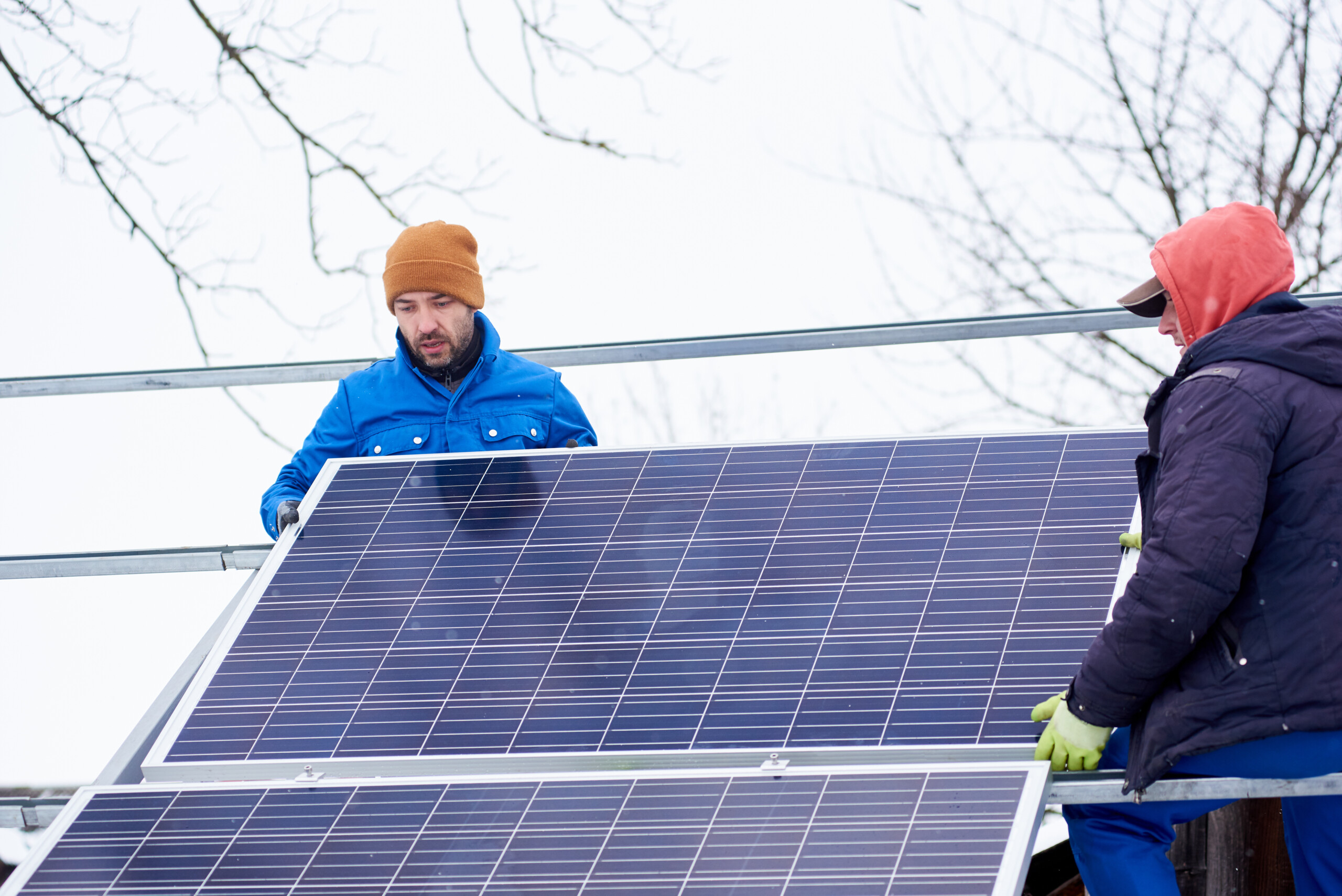
If you live in Minnesota, maximizing solar panel winter performance is essential for keeping your system productive during the coldest months of the year. While winter brings snow, shade, and shorter days, solar panels still work extremely well in cold weather — and with the right strategies, you can maintain strong production all season long.
This Wolf River Electric guide outlines the most effective ways to optimize solar panel winter performance in snowy Midwest climates.
1. Why Solar Works in Cold Weather
Many homeowners are surprised to learn that solar panel winter performance can actually improve in cold temperatures. Solar panels operate more efficiently when the air is crisp and cool — and Minnesota’s winter climate provides plenty of cold, sunny days.
The National Renewable Energy Laboratory (NREL) confirms that cooler temperatures improve PV efficiency and that snow can even increase light reflection back onto panels.
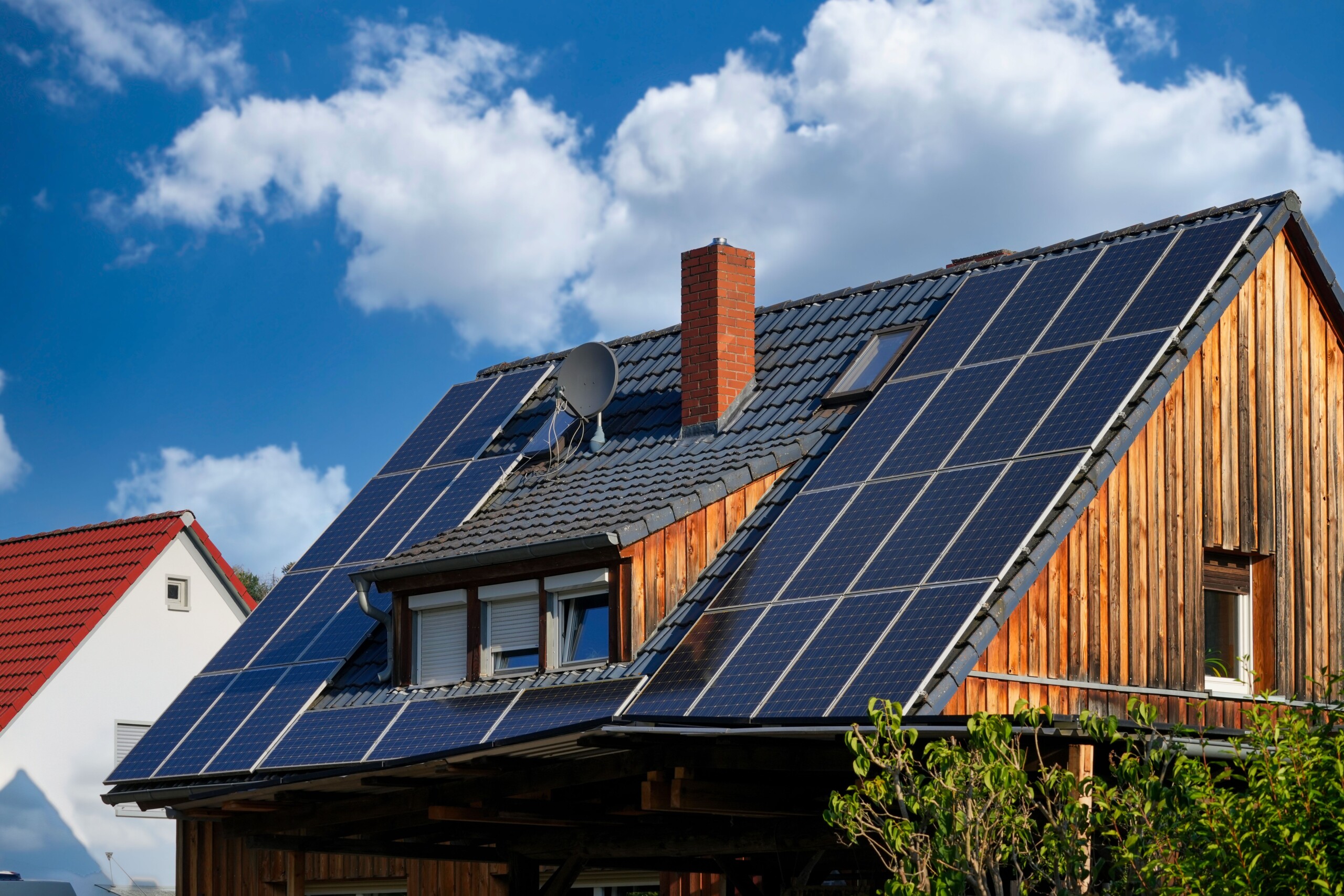
2. Tip #1: Optimize Tilt Angle for Better Solar Panel Winter Performance
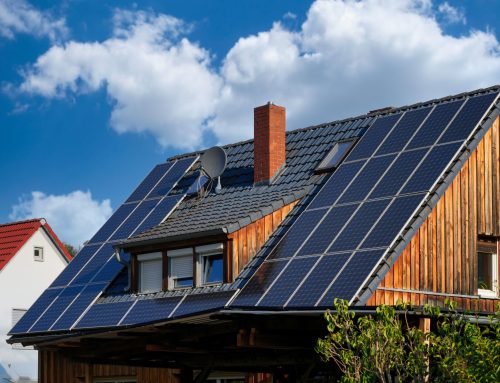
Increasing your solar array’s tilt can improve snow-shedding and boost winter sunlight capture.
A steeper winter angle helps panels:
-
Shed snow faster
-
Capture low-angle sunlight
-
Reduce obstruction from nearby trees and structures
Wolf River Electric can adjust system design or recommend optimal tilt angles during installation.
3. Tip #2: Manage Snow & Tree Shade Before Winter Hits
Snow buildup reduces solar panel winter performance, but safe snow management can help.
Safe Snow-Clearing Tips:
-
Use a soft, non-metal roof rake
-
Never use rock salt or ice melt
-
Avoid climbing on the roof
The U.S. Department of Energy advises maintaining panels gently to avoid damage and to optimize performance.
Tree shade also increases during winter due to lower sun angles, so trimming strategic branches in late fall can boost winter production.
4. Tip #3: Use Micro-Inverters for Better Snow Performance
In Minnesota winters, solar panel winter performance is significantly better with micro-inverters compared to string inverters.
Why Micro-Inverters Help:
-
Each panel works independently
-
Snow on one panel doesn’t drag down the entire system
-
Panels begin producing the moment snow melts off any part of the array
Learn more about inverter differences on our previous inverter guide blog.
5. Tip #4: Leverage Battery Storage for Winter Reliability
Battery storage improves solar panel winter performance by ensuring you can use stored energy during:
-
Cloudy days
-
Snowy mornings
-
Evening hours when sunlight is limited
Home batteries also provide backup power during winter outages.
6. Tip #5: Monitor System Performance Daily
Monitoring apps help track:
-
Snow coverage
-
Shading
-
Inverter performance
-
Temperature-related variations
-
Alerts or faults
Daily checks ensure your system maintains strong winter output and helps you catch issues early.
7. Tip #6: Get a Winter Inspection from Wolf River Electric
Wolf River Electric performs winter-specific solar inspections to ensure systems remain optimized for Minnesota’s extreme climate. Our team checks:
-
Snow shedding patterns
-
Panel health
-
Inverter function
-
Structural load considerations
-
Electrical performance
A pre-winter inspection often boosts performance throughout the season.
Conclusion
Improving solar panel winter performance ensures your system produces clean, reliable energy even through Minnesota’s coldest months. By adjusting tilt angles, using micro-inverters, managing snow safely, and adding battery storage, you can maximize production all winter long. Wolf River Electric is here to help you maintain strong performance year-round.
👉 Ready to optimize your winter solar output? Contact Wolf River Electric today.